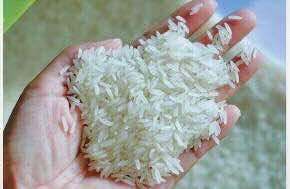
Basmati rice, long associated with prestige across South Asia, has become the focus of a long-running dispute over its origins, geographical indication (GI) rights and global identity involving India, Pakistan and Nepal.
Nepal is now preparing to introduce its first standalone legal framework for geographical indications, potentially strengthening its claim over basmati and other products including Ilam tea, Jumla beans and Bhaktapur’s juju dhau, or “king of yoghurt”.
The government is moving ahead with an Industrial Property Bill that would provide legal recognition to GI products. The proposed law would establish rules for protecting Nepali products in domestic and international markets and allow Nepal and other countries to recognise each other’s GI-protected products through bilateral agreements.
Nepal currently has no separate law governing geographical indications. Article 25 of the constitution guarantees property rights, including intellectual property, while the Copyright Act 2002 provides some protection for intellectual creations.
The bill would replace the Patent, Design and Trademark Act 1965 with a broader industrial property law. It was introduced in the House of Representatives on June 6, 2025, by then-industry minister Damodar Bhandari, but became inactive after Parliament was dissolved on September 12 following the Gen Z protests. The government later revived it as priority legislation to be enacted within a year.
The proposed law defines a geographical indication as “any sign or geographical name identifying goods produced or processed in a specific geographical location or region where those goods possess qualities, reputation or characteristics associated with that area.”
The long-running basmati dispute
The international battle over basmati gained global attention in 1997, when Texas-based RiceTec registered a patent with the United States Patent and Trademark Office (USPTO) for basmati rice and named it “Texmati”.
India challenged the claim through the Agricultural and Processed Food Products Export Development Authority (APEDA), while more than 50,000 people protested outside the US Embassy in New Delhi. Environmentalist Vandana Shiva called RiceTec’s claim “absurd”.
Following India’s challenge, RiceTec withdrew 15 of its original 20 claims. The remaining rights covered three hybrid varieties developed by the company: Basmati-867, RT-1117 and RT-1121.
The company did not secure exclusive rights over the traditional name “basmati” and later lost its patent rights after failing to pay maintenance fees.
The dispute also brought India and Pakistan together in opposing attempts by a foreign company to claim ownership of the traditional rice name.
India applied for GI protection for basmati in the European Union on July 20, 2018. The application was published in the EU’s Official Journal on September 11, 2020.
India had already granted GI status to basmati in May 2010, covering regions including Punjab, Haryana, Himachal Pradesh, Uttarakhand, Delhi’s surrounding areas, Uttar Pradesh and parts of Jammu and Kashmir.
Pakistan strengthened its claim by introducing GI legislation in 2021 and submitting a separate application to the EU on August 24, 2023.
Nepal entered the dispute on December 9, 2020, when it filed an objection with the European Union against India’s GI application.
Advocate Gaurish Krishna Kharel, an intellectual property and international trade law expert, said Nepal’s intervention followed repeated calls for government agencies and researchers to act.
“We have done so much research on basmati. If we remain silent, India will claim it exclusively,” Kharel recalled telling scientists at the National Agricultural Research Council (NARC) and the National Agriculture Genetic Resource Centre (Genebank).
“This was the first time Nepal had formally challenged a claim at an international forum,” he said.
Documents obtained by Kantipur showed that Nepal based its EU objection on several arguments. It said basmati had historically been cultivated, traded and consumed in Nepal; international researchers had identified the Tarai-Madhesh region as one possible origin of basmati; and Nepal possessed significant phenotypic and genetic diversity in basmati varieties.
Nepal also highlighted the cultural importance of aromatic rice cultivation. Varieties including basmati, Kalanamak, Hansharaj and Jhinuwal were grown across more than 30,000 hectares in 41 districts.
Four local basmati varieties, including Pokhareli Jethobudho, Lalka Basmati, Shuddhodhan Kalanamak and Kalonuniya, had been registered with the National Seed Board. The Genebank had also collected and preserved more than 80 germplasm samples of basmati-type rice from across Nepal.
Bal Krishna Joshi, chief of the Genebank, said Nepal’s intervention, although delayed, was significant.
“It is encouraging that Nepal finally submitted its claim,” he said. “This was the first time the country formally presented its position on this issue at an international forum.”
Pratyush Nath Upreti, an international expert on intellectual property and trade investment law and a reader at Queen’s University Belfast, said Nepal’s claim had merit.
“Historical links, the cultural significance of basmati and traditional cultivation practices in Nepal strengthen Nepal’s position,” he said.
But Upreti said Nepal faced a major weakness.
“Much of Nepal’s historical evidence and research has not been effectively presented internationally,” he said. “Some evidence has remained overlooked because of language and translation barriers.”
Kharel said India’s own GI claim could indirectly support Nepal’s position because India’s proposed basmati region included areas bordering Nepal, including parts of Uttar Pradesh and Uttarakhand.
“Basmati does not grow according to political boundaries,” he said. “If the same geography and climate exist on both sides of the border, it cannot be argued that basmati can grow on one side but not the other.”
He also said Australia had refused to grant GI certification to Indian basmati after objections from Pakistan and Nepal.
Indian exporters rejected Nepal’s claim.