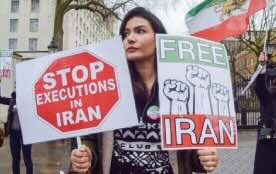
The persecution of lawyers is not a peripheral human rights concern that can be neatly categorised and set aside. Rather, it is the clearest possible indication that the rule of law itself has collapsed.
When those entrusted with defending legal safeguards become the primary targets of state violence, the legal system no longer functions as a system of justice but as an instrument of control.
In Iran, that point has long since been reached.
Mohabbat Mozafari, born in 1989, was a lawyer and a PhD student who represented women detained during the 2022 protests against Iran’s compulsory hijab laws.
In October 2022, she was arrested and imprisoned in Tehran’s Evin prison, where she was subjected to beatings and torture before being released, only to die soon after in February 2023 from a brain haemorrhage under circumstances that remain deeply troubling and unresolved.
Her death should not be understood as an isolated tragedy, nor dismissed as an unfortunate consequence of unrest.
It should be recognised as a warning to the legal profession as a whole, because Mozafari was one of several lawyers who have died in suspicious circumstances after representing protesters and challenging state authority through lawful advocacy.
Although her courage is now commemorated in On the Front Line for Justice, an exhibition staged the Law Society in the United Kingdom, remembrance without accountability risks becoming a comfortable substitute for action, allowing institutions to honour bravery symbolically while avoiding engagement with the conditions that made such bravery fatal.
What is occurring in Iran is not harassment at the margins of the profession, but the systematic dismantling of legal independence itself.
Profession under siege
The International Bar Association’s Human Rights Institute, together with the Centre for Supporters of Human Rights, has documented in its report No Defence a sustained and deliberate campaign against lawyers, demonstrating that the repression is not episodic but structural, aimed at neutralising legal professionals as a means of suppressing broader civil resistance.
Since the 1979 revolution, Iran’s legal profession has been progressively stripped of independence through legislative and institutional mechanisms, including the creation of a parallel, judiciary-controlled bar association that enables direct interference in the licensing, discipline and continued practice of lawyers, with ideological conformity now a prerequisite for professional survival.
Since 1997, lawyers have been required to demonstrate belief in, and practical commitment to, Islamic principles as interpreted by the state, a requirement that bears no resemblance to professional regulation.
Instead, it functions as political filtration, ensuring only those deemed ideologically acceptable are permitted to practise.
It is precisely for this reason that, in New Zealand, I consistently and deliberately advocate against ideology being permitted to infiltrate the rule of law or to dictate how lawyers are expected to operate, because I have seen first-hand the profound and lasting damage that follows when legal systems abandon principle in favour of belief.
Women lawyers are subjected to even harsher constraints, as mandatory hijab laws intrude directly into their professional lives and undermine their ability to participate fully and independently in legal practice.
Broader social and legal restrictions further erode their standing within a system already hostile to professional autonomy.
Not only are you routinely and openly disrespected simply because you are a woman, but even gaining access to the courtroom becomes an exercise in humiliation, involving invasive screening processes carried out despite compliance with the strictest form of mandatory hijab, which I myself (pictured) was forced to wear.
As reflected in the photograph, strangely enough I am even smiling; we were always full of hope at the time. Yet that outward composure coexisted with treatment designed to demean rather than secure, including being ordered to remove my shoes and appear barefoot before the court on the pretext that they were triggering security alarms, a demand that was plainly deliberate and intended to break one’s dignity.
When those shoes conveniently “disappeared” by the time proceedings concluded, leaving me to be told they had been lost, it became clear that this had never been about security at all, but about degradation, control and a broader strategy to remind women lawyers that their presence in the courtroom was tolerated only on terms of submission.
Targeting the most courageous
Among the most prominent examples of this repression is Nasrin Sotoudeh, whose career has been defined by her defence of political prisoners, women opposing compulsory hijab laws and families seeking accountability for state violence.
She has paid for that commitment through repeated arrests, prolonged imprisonment, solitary confinement and punitive sentences designed not merely to punish her personally but to deter others from following her path.
More recently, the death of Khosrow Alikordi, a respected human-rights lawyer who represented detained protesters and families of victims of the Woman, Life, Freedom movement, and who was found dead in his Mashhad office on 5 December 2025, has further underscored the dangers faced by those who continue to practise law with integrity under the current regime.
[…]
The scale of the atrocity
At the time of writing, since 8 January alone more than 43,000 protesters have been killed, more than 350,000 have been seriously injured and more than 10,000 have been deliberately blinded.
These figures that are staggering, not only in scale but in what they reveal about the systematic nature of the violence.
[…]
The least we can do
The question is not whether the legal profession can transform Iran’s political system overnight, but whether it will remain silent while colleagues practise under conditions so extreme that adherence to professional ethics carries a risk of death.
Men and women lawyers in Iran continue to stand up for the rule of law with full knowledge of what it may cost them. The very least the international legal community can do is speak about their plight, remember those who have been lost, and refuse to normalise a world in which defending justice is treated as a capital offence.
When lawyers are executed for standing up for the rule of law, silence is no longer neutrality but complicity.
Perhaps the clearest articulation of what is at stake comes from the late Khosrow Alikordi himself, who understood better than most the cost of refusing to submit to injustice.
“If I am killed, I am just one person — it is nothing. Do not let my homeland fall into the hands of the vile,” he said.
Those words were not an expression of despair, but of professional and moral clarity.
They stand as a final reminder to the international legal community that when lawyers are silenced, imprisoned or executed for upholding the rule of law, what is ultimately at risk is not the life of one lawyer alone, but the survival of justice itself.
When lawyers are the target: why the legal profession cannot look away from Iran