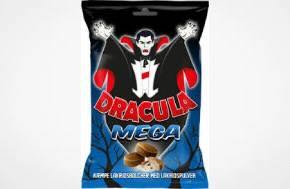
The judgment of the Court of Justice of the European Union (CJEU) in Lunapark Scandinavia Oy Ltd v Hardeco Finland Oy (Case C-452/24) is one of the most significant trademark decisions originating from Finland in recent years. The case examined whether a trademark owner may lose the ability to take action against infringing use of a trademark if it has allowed parallel use of the mark to continue for a prolonged period of time without taking legal action.
Decades of Parallel Use in the Background
Lunapark is the owner of the Finnish word trademark DRACULA, registered, among other goods, for confectionery products in class 30. The application was filed in 2003 and the registration was granted in 2009.
At the same time, a competitor (originally Karkkimies Oy and later Hardeco Finland Oy) had been using the Dracula trademark for confectionery products already before Lunapark’s registration and continued using the mark after registration, despite not having its own registered trademark. For many years, Lunapark did not challenge Hardeco’s use of the Dracula name. Eventually, in 2020, Lunapark brought infringement proceedings seeking to prohibit Hardeco from using the Dracula name and character for confectionery products and claiming compensation for the use of the mark.
In Finland, courts have traditionally applied a private-law principle according to which a claim should be brought within a reasonable time after the claimant becomes aware of, for example, a trademark infringement.
The Market Court found that trademark infringement had indeed occurred but dismissed Lunapark’s claims on the grounds that Lunapark had, through its prolonged inaction, forfeited its right to pursue those claims (see MAO:36/2022).
The CJEU Decision
Read Boco’s full report at Lexology
https://www.lexology.com/library/detail.aspx?g=170f696f-fd18-44c6-bf55-8a280f3ed3f1