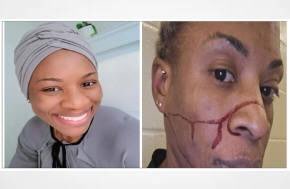
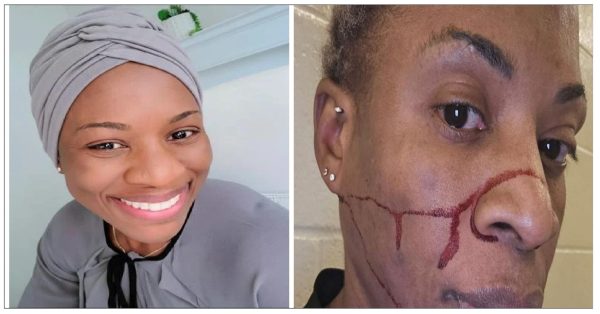
On January 23, 2026, a disturbing incident unfolded in the Oshawa courthouse that forced the Canadian legal profession to confront a truth many Black lawyers have long known but too often endured in silence. Sudine Riley, a Black woman and criminal defence lawyer, had just completed a trial and was working in a private interview room when uniformed Durham Regional Police officers challenged her presence in the courthouse. What followed, according to her lawyer, was a violent assault: her head was slammed onto a desk, knees pressed into her back and neck, her headscarf ripped off, and she was handcuffed, dragged to courthouse cells, and left injured and bleeding. According to Neha Chugh, counsel for Ms. Riley, she “committed no offence other than being a Black woman practising law.”
A Disturbing Stereotype
This incident is not merely about excessive force. It is about belonging. It is about the deeply entrenched, anti-Black stereotype that positions Black people in courthouse spaces as suspects rather than professionals; as bodies to be controlled rather than minds to be respected. In Ms. Riley’s case, the stereotype appears to have operated with brutal efficiency: a Black woman in a courthouse was perceived not as a lawyer and an officer of the court, but as someone who needed to justify her presence, someone whose legitimacy in that space was presumptively in doubt.
Courthouses are meant to be sanctuaries of the rule of law. Lawyers should be among the safest people within that space. When a lawyer lawfully present and engaged in professional duties is subjected to violence and humiliation like Ms. Riley, the harm extends far beyond the individual. It strikes at the integrity of the justice system itself. A legal profession in which some lawyers must fear physical harm or degradation while doing their jobs is one that has failed its foundational promise of equality before the law.
The Ms. Riley incident is extreme, but it is not anomalous. It represents the violent end of a spectrum of racialized treatment that Black legal professionals routinely encounter in Canadian courthouse spaces.
Read More