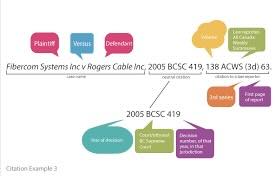
Legal citation isn’t what most would consider a good ‘ol time. I’m sympathetic to student complaints! But, alas, it is important and must be taught. Part of teaching is preventing bad habits. While grading assignments I’ve noticed a common practice of copying and pasting a URL in lieu of a citation, or tacking a URL on the end of a semi-complete or complete citation. Hyperlinks seem helpful and modern—just one click to get to the source! In legal writing, however, a citation should allow the reader to quickly identify, locate, and verify the source across platforms and over time. A proper legal citation to primary law and traditional secondary sources often does that work without any URL at all.
But I Like URLs!
Me too—when they’re in an address bar. Remember that a legal citation has two basic functions: (1) It credits and identifies the source that has been relied on and (2) it enables a reader to locate that source from multiple entry points. Providing a lone URL does neither of these reliably and tacking it onto the end of a citation is often just clutter.
Despite the name “Uniform Resource Locator,” a URL does not guarantee persistent access. Links break, sites change, servers hiccup, domains lapse, and access to proprietary platforms varies. And when dropped at the end of a citation unnecessarily, long URLs can distract from the elements that matter.
Read full article
https://www.slaw.ca/2025/09/30/avoiding-a-404-when-to-add-urls-to-legal-citations/