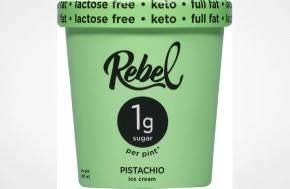
Rebel Creamery LLC, the maker of Rebel Ice Cream sold at major retailers including Walmart, Target and Kroger, filed for Chapter 11 bankruptcy protection on August 14 to restructure its debts following a costly trademark infringement judgment.
The Midway, Utah-based company filed its petition in the U.S. Bankruptcy Court for the District of Utah, listing between $10 million and $50 million in both assets and liabilities, according to court documents.
The bankruptcy filing triggers an automatic stay on all litigation against Rebel Creamery, temporarily pausing further legal proceedings in the case while the company’s restructuring moves through bankruptcy court. The filing comes just weeks after a federal judge in New York ruled decisively against the company in a long-running trade dress dispute with rival ice cream maker Van Leeuwen.
A Costly Trademark Defeat
The bankruptcy followed a July 16 ruling from Judge Eric Komitee of the U.S. District Court for the Eastern District of New York, who found that Rebel Creamery had intentionally copied Van Leeuwen’s distinctive pint packaging, awarding Van Leeuwen $23.785 million in disgorged profits. The judge’s order also permanently barred Rebel from selling ice cream in packaging that infringes on Van Leeuwen’s trade dress and required the company to redesign its cartons.
According to court documents, Van Leeuwen’s packaging featured a specific combination of monochromatic pastel cardboard pints, matching lids, black cursive script lettering with an exaggerated capital letter, and an overall minimalist design aesthetic. The court found that Rebel used a near-identical color scheme and script style, with only slight design differences intended to convey dietary information, and concluded there was clear evidence of actual consumer confusion in the marketplace.
A Five-Year Legal Battle
The case, formally titled Van Leeuwen Ice Cream LLC v. Rebel Creamery LLC, originated in 2023 when Van Leeuwen first sued Rebel over the alleged packaging similarities. Van Leeuwen founder Ben Van Leeuwen testified during the litigation that he and his co-founders were shocked when an employee first showed them Rebel’s pints, though they initially hesitated to file suit given Rebel’s limited capital and the company’s lack of prior litigation experience.
The court ultimately sided decisively with Van Leeuwen on every major issue in the case, finding Rebel liable for trade dress infringement, unfair competition and dilution under both the Lanham Act and New York state law. Legal analysts have described the ruling as a significant clarification of when modern, minimalist product packaging can qualify for trade dress protection under federal law.
What Chapter 11 Means for Rebel Creamery
Chapter 11 bankruptcy allows a company to continue operating while restructuring its debts under court supervision, rather than being forced to liquidate entirely. For Rebel Creamery, the filing offers a path to potentially satisfy its obligations to Van Leeuwen and other creditors over time while continuing to sell its ice cream products, assuming it can redesign its packaging in compliance with the court’s injunction.
The filing does not necessarily mean Rebel Creamery products will disappear from store shelves, as companies in Chapter 11 frequently continue normal business operations throughout the restructuring process. However, the scale of the judgment relative to the company’s listed assets suggests the coming months will involve significant negotiation between Rebel Creamery, Van Leeuwen and the company’s other creditors as the bankruptcy case proceeds.
A Growing Industry Under Pressure
The dispute unfolds against the backdrop of a growing ice cream store industry, which according to IBISWorld data grew 5.8 percent to $7.4 billion in the five years through 2025, including 0.9 percent growth in 2025 alone. That expansion has intensified competition among premium and better-for-you ice cream brands, a dynamic that legal observers say may have contributed to the packaging dispute between the two companies in the first place.
Rebel Creamery has also previously faced a separate class action lawsuit alleging its marketing misleadingly promoted the health benefits of its high-fat ice cream products, though that case remains a distinct matter from the trademark dispute that precipitated this week’s bankruptcy filing. As the Chapter 11 process unfolds, further details about the company’s restructuring plan and its path forward are expected to emerge through subsequent bankruptcy court filings.