Analysis of 31,977 ranking URLs across 288 U.S. markets reveals which URL attributes correlate with top organic positions for law firm websites.
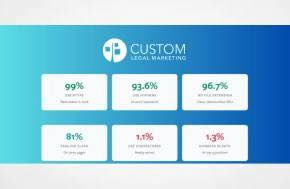
SAN FRANCISCO, CA / ACCESS Newswire / March 16, 2026 / Custom Legal Marketing (CLM) has released the findings of a comprehensive study examining the relationship between URL structure and organic search rankings for law firm websites. Conducted using CLM’s proprietary AI platform, CLM Sequoia, the study is believed to be the largest empirical analysis of law firm URL architecture ever published.
The research team analyzed 31,977 unique URLs appearing in the top 8 organic Google results for 32 high-intent legal keywords across 288 major U.S. metropolitan areas, producing a dataset of 73,674 total ranking appearances. Every URL was parsed for more than a dozen structural attributes, including length, path depth, keyword presence, geographic signals, domain composition, HTTPS usage, word separators, file extensions, and trailing slash patterns. Sites were classified as law firm websites, legal directories, or resource sites, and all findings were segmented by ranking position, practice area, and individual keyword.
“There is a lot of conventional wisdom in legal SEO about how to structure your URLs, but very little of it is grounded in data at this scale,” said Jason Bland, Founder and CEO of Custom Legal Marketing. “We wanted to move the conversation from opinions to evidence. When you can look at what 31,977 ranking URLs actually have in common across 288 cities, the patterns become very clear, and some of them challenge assumptions that firms have been operating on for years.”
Key Findings of the Law Firm URL Study
The study examined eight practice areas personal injury, criminal defense, family law, estate planning, business law, workers’ compensation, medical malpractice, and employment law. While workers’ compensation and medical malpractice are sub-practice areas of personal injury, many regions have firms that specialize in those ares or exclude them from their practice set which is why Sequoia researches them as standalone practices. The study found that URL-level signals vary significantly across practice areas. Patterns that hold strongly in one practice area may be irrelevant or even reversed in another.
Among the headline findings:
One URL attribute showed a consistent, monotonic correlation with higher rankings across every single position from 1 through 8, with the largest positional spread of any metric measured in the study. The full report identifies which attribute it is and breaks down the rates by practice area.
Read more
https://finance.yahoo.com/news/custom-legal-marketing-publishes-largest-180000323.html