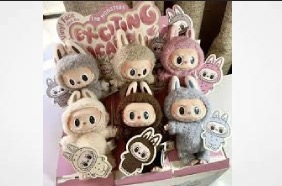
In the world of designer toys, few characters have captured hearts and consumer sales quite like Labubu. Created by artist Kasing Lung and popularised by Chinese company Pop Mart, Labubu is part of “The Monsters” series – a whimsical blend of Nordic folklore and modern culture. Since its debut, Labubu has become a global sensation, with Pop Mart’s stock soaring 200% since the start of 2025. However, with increasing popularity comes a dark side – counterfeiting.
INTA defines counterfeiting as the “illegal production and sale of goods (including packaging) bearing without authorization a trademark that is identical to a validly registered trademark or that cannot be distinguished from such a trademark”. In the United States, the Trademark Counterfeiting Act 1984 criminalises the international trafficking of goods or services with a counterfeit mark. Under this Act, brand owners must have a federal registration of their mark in order to bring an enforcement action (18 USC § 2320(f)(1)(ii)).
The rise of the ‘Lafufu’
Labubus are uniquely exposed to the dangers of counterfeiting for several reasons. Primarily, the limited availability and high resale value of the collectible makes them a financially attractive target. Pop Mart’s blind-box model also means purchasers often do not know which figure they will get, thereby limiting the ability to inspect the toy prior to buying. Finally, while the average price of a Labubu in the United States is US$30, larger or rarer editions have frequently fetched hundreds of dollars, especially when sold on secondary markets. In fact, counterfeit Labubus have become so common that the media and public have given them their own name – “Lafufus”.
Lafufus mimic the look of the original but often lack key details and safety standards. In August 2025, the US Consumer Product Safety Commission issued an urgent safety warning to Labubu collectors regarding the dangers of “lookalike Labubu dolls”. The commission warned that the fake dolls present a choking risk, while other outlets warned of toxic materials.
How Pop Mart is combatting the problem
Pop Mart is aware of the problems posed by Lafufus and has deployed anti-counterfeiting measures directly in its products. Authentic Labubus have distinct features: nine teeth, a peach-coloured face and a Pop Mart logo on the foot. The blind-box packaging includes a unique QR code, UV stamp and holographic sticker.
Pop Mart also utilises existing enforcement infrastructure to protect its IP rights. Pop Mart owns US trademark registrations for the LABUBU word mark (registration 7839144) THE MONSTERS composite mark (registration 7839156) (see Figure 1). Pop Mart also owns copyright registrations for its original Labubu artwork and designs, including the blind boxes, packing bags and dolls themselves. Pop Mart’s trademark registrations and anti-counterfeiting initiatives support enforcement efforts by the US Customs and Border Protection (CBP) to safeguard its brand. The largest seizure of Lafufus occurred in the Seattle airport in September 2025, when the CBP officials seized more than 11,000 collectibles worth over US$500,000.
Figure 1. Pop Mart’s composite mark
Pop Mart has also begun protecting its brand in court. In July 2025, Pop Mart filed a trademark infringement lawsuit against 7-Eleven and several of its California franchisees at the US District Court for the Central District of California (Pop Mart, Inc v 7-Eleven, Inc, 2:25-cv-6555, CD Cali, 18 July 2025). The complaint alleges that multiple 7-Eleven stores sold counterfeit versions of Labubus, using identical or nearly identical trademarks, trade dress and packaging (see Figure 2). The lawsuit includes photographic and video evidence, social media posts and receipts from undercover purchases. Pop Mart is seeking injunctive relief, punitive damages and legal costs, asserting 17 causes of action including trademark counterfeiting, trade dress infringement and unfair competition.
Figure 2. Sample comparisons from complaint
The road ahead
Ultimately, the battle against counterfeiting is more than protecting profits, it is about preserving the integrity of art and ensuring consumer safety. However, Pop Mart has a financial stake in resolving the counterfeiting crisis as soon as possible; the oversaturation of the market and general cycles of consumer spending have led to a 14.3% price decrease in the latest Labubu drop. In order to maintain the popularity of Labubus, Pop Mart must effectively manage brand perception, enforce its IP rights and strategically time product releases to align with consumer demand cycles while avoiding market saturation.
Greg Phillips, Stella Haynes Kiehn
Knobbe Martens
Subscribe here for related insights, breaking industry news and cutting-edge market analysis from global experts.
IAM is universally acknowledged as the world’s leading intelligence platform for practising lawyers working in intellectual property and patent law.
https://www.lexology.com/library/detail.aspx?g=964b200c-da0c-47c3-81df-6ef96ef1d4e5