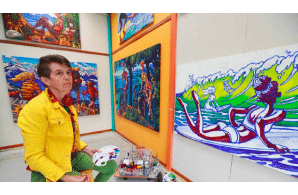
An artist whose paintings are entwined in a marriage breakup feels her “whole core” and identity have been taken after her ex-husband won the right to jointly own the copyright of her work.
Sirpa Elise Alalääkkölä says “other artists should be worried” about their personal brand and the ramifications of a precedent-setting case that ruled the copyright of the art created during her 20-year marriage is relationship property.
Artists fear what this means for their intellectual property while in a relationship, and an academic warns the decision has significant implications that undermine a person’s moral right for personal expression.
Alalääkkölä says she has finally found strength to speak out following four years of legal battles that left her “broken” and afraid to defend herself.
She separated from her husband, Paul Anthony Palmer, in 2017. After she thought her “life’s work” had been burgled from her Ngakuta Bay studio near Picton in September that year, he admitted to Stuff that he took the paintings as leverage for their split.
The Marlborough Sounds family home and the paintings Alalääkkölä created during their marriage then became subject to a division of relationship property in the Family Court in Blenheim last year.
The judge ruled that as the Copyright Act vested copyright to the creator of the artworks, and Alalääkkölä’s skill existed before the relationship, the copyright could not be relationship property.
Palmer appealed against that decision – an “unchartered area” never before seen in New Zealand – and a High Court judge ruled last month the paintings and copyright were relationship property.
The decision means not only could Palmer now receive some of Alalääkkölä’s actual paintings, but he could also stand to gain ownership of some of the underlying intellectual property rights.
The division of that relationship property will now be decided in the Family Court, and Alalääkkölä has this week sought leave to appeal against the copyright decision.
Alalääkkölä told Stuff she had disengaged from the court process because she was emotionally “broken”, and did not feel her ex-husband was trying to negotiate a fair deal.
Only now has she realised the ramifications of not defending what her ex-husband was fighting for, she said.
“I always thought the copyright belonged to the creator and no-one could take that. Now it’s happened.
“When I heard the decision I just felt sick.”
The court battle left her with anxiety attacks so bad she once fainted while reading an affidavit at home, and she is now getting support from a counsellor.