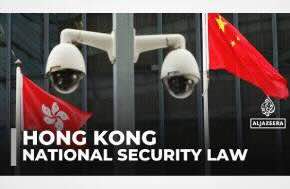
Six years after Beijing imposed its National Security Law, many of Hong Kong’s opposition voices have gone silent. Danny Vincent looks at what’s changed.
Transcript
DON GONYEA, HOST:
This week, Hong Kong marked two major political milestones – 29 years since Britain handed the territory over to China and six years since Beijing imposed its sweeping National Security Law. Officials said at the time the law would only affect a small number of people, but critics say it has transformed life in Hong Kong. Today, most of the city’s political opposition has dissolved, been jailed or gone into exile. Danny Vincent reports from Hong Kong.
(SOUNDBITE OF SHUTTERS BANGING)
DANNY VINCENT, BYLINE: At night, supporters gather outside a shuttered bookstore to mourn its closing. They wear black, the color of Hong Kong’s protest movement, and stand quietly looking at the metal shutters.
(SOUNDBITE OF ARCHIVED RECORDING)
UNIDENTIFIED REPORTER: (Non-English language spoken).
VINCENT: Last week, Hong Kong media reported the owners were arrested for allegedly selling seditious material. For many in Hong Kong, the bookstore arrests are the latest sign that the space for public dissent continues to shrink.
(SOUNDBITE OF PAGES TURNING)
VINCENT: In an undisclosed location, veteran activist W flips through a local newspaper.
W: No, they are not reporting anything political.
VINCENT: Until six years ago, she’d been active in Hong Kong’s once-vibrant protest movement. Now she asks NPR to only use the first initial of her name for fear of government reprisal. July 1 has been a divisive day in Hong Kong’s recent history. While officials celebrated the anniversary of the city’s return from British to Chinese rule in 1997, activists like W would join a large political march. But since Beijing imposed a controversial national security law on June 30 in 2020, W says she began to notice something different in the lead-up to the anniversary.
On July 1, NPR saw plainclothes men following W from a gathering, across several stops on the subway and into a busy shopping district where small groups of activists gathered to quietly mark the anniversary of the handover. W says on days like this, she feels she’s under surveillance. Hong Kong police told NPR that they take action in accordance with the law and made appropriate deployments due to the threat of public safety, public order and national security.
Do you know where the red lines are?
W: I don’t know. Yeah, because some people are still saying things that’s against the government on Facebook, but they’re – nothing happened to them. But some only have less than 100 followers in Facebook, and they got jailed. No, I don’t know the red line.