Three Yale Law School professors criticized U.S. strikes on Iran, and some said President Donald Trump violated the Constitution and the United Nations charter.
After the United States and Israel conducted military strikes on Iran on Saturday, killing its supreme leader Ali Khamenei, Yale Law School professors broadly condemned the attack as a violation of international law.
Three professors argued that President Donald Trump lacked the constitutional authority to declare war without Congress. Sterling Professor Harold Hongju Koh, who served as a legal adviser to the State Department during President Barack Obama’s administration, argued that Trump violated the United Nations charter by killing Iran’s leader without a legitimate reason for self defense.
“This is a war of choice that is unlawful under both US and international law,” Koh wrote to the News.
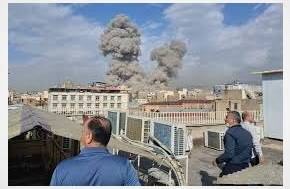
Besides Khamenei, the attacks and resulting counterstrikes killed many of Iran’s high-ranking political and military leadership, hundreds of Iranians and six American service members, as of Monday night, according to The New York Times. U.S. officials have said the military campaign will continue, the Times reported.
Trump has defended the attacks as necessary to protect American interests. Ahead of a Medal of Honor ceremony at the White House on Monday, Trump called Iran’s missile capabilities a “very clear colossal threat” to the U.S. and its allies, according to reporting by NPR.
Professor Oona Hathaway, who specializes in international law, condemned Trump’s attacks in a post on X.
“Today’s attack on Iran is an attack on the postwar legal order. Yet again, Trump has taken an action that threatens to end an era of historic peace and return us to a world in which might makes right. The cost will be paid in human lives,” Hathaway wrote.
Hathaway also re-posted past op-eds she had written on the United States’ June strikes on Iranian nuclear facilities and January seizure of former Venezuela President Nicolás Maduro. She argued that both decisions violated international law.
On Jan. 3, Trump ordered a pre-dawn military strike in Venezuela that led to the arrests of Maduro and his wife, Cilia Flores. The strike was condemned by other legal scholars alongside Hathaway as a violation of the U.N. Charter.
Additionally, Koh criticized Trump for striking Iran despite previously claiming that the Iranian nuclear threat had been eliminated during the June strikes. Koh added that the strikes were a distraction from the Epstein files and a recent Supreme Court ruling that invalidated many of Trump’s tariffs.
“In falsely framing the choice as between attack and doing nothing, he ignored the obvious third way: addressing the threat through multilateral diplomacy, which the Obama administration had done via the Iran Nuclear Deal, before Trump tore it up with no backup plan and now no exit strategy,” Koh wrote.
Professor Samuel Moyn argued that international condemnation of American aggression has been ineffective and called for a broader antiwar movement.
“Which is more surprising? That the illegality of our attempt at Iranian regime change is so undeniable, or that few draw the equally undeniable conclusions when its illegality doesn’t matter one more time?” Moyn wrote. “Condemnation of violations of the rules makes no difference. Only an antiwar movement aiming at better control of warlike powers — including all of Iran, Israel, and the United States — might.”
In a brief interview, Sterling Professor Akhil Amar declined to comment specifically on the Iranian attacks, saying it was too early to see the scope of the operation. Amar referred to his previous comment on the Venezuela operation, in which he appeared skeptical that it constituted war.
“There are nice questions about how much force is necessary before we call something a war. Was Grenada a war? Was the bombing of Libya a war? Was the raid on bin Laden a war? These are the hard questions worth asking,” Amar said in an interview at the time.
Khamenei ruled Iran for over three decades.
Henry Liu covers Yale Law School as a staff reporter for the University desk as well as business and biotech for the City desk. Previously, he covered the graduate and professional schools. Originally from Houston, Texas, Henry is a sophomore in Morse College majoring in history.