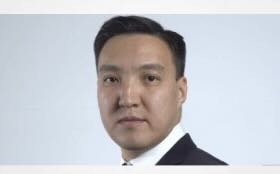
The International Commission of Jurists (ICJ) expresses serious concern at the civil proceedings initiated by the Ministry of Justice of the Republic of Kazakhstan seeking the revocation of the licence of lawyer Adam Murat. The organization is concerned that the revocation proceedings seek to impose the most severe professional sanction on a practising lawyer for his legitimate conduct, which, in fact, was an integral part of his representation of a client facing criminal proceedings. Licence revocation permanently deprives lawyers of their authorization to practise their profession and constitutes an exceptional measure. The basis and context of these proceedings raise serious concerns under international human rights law and standards relating to the independence of the legal profession.
“International human rights law and standards require that lawyers be able to exercise their profession independently and to speak freely on matters concerning the administration of justice, without fear of retaliation. Proceedings that seek to remove a lawyer from practice on the basis of public statements made in the course of defence work risk restricting freedom of expression and undermining the ability of lawyers to carry out their professional functions in accordance with international standards,” Temur Shakirov, Director of the ICJ Europe and Central Asia Programme, said.
On 29 December 2025, the Ministry of Justice filed a civil claim before the Bostandyk District Court of Almaty seeking revocation of Murat’s licence to practise law based on a submission of the Ministry of Internal Affairs dated 23 December 2025 alleging that Murat committed “gross or repeated violations” of legislation and professional ethics. The Ministry of Justice’s claim against Murat arose from criminal proceedings against journalist Gulnara Bazhkenova, editor-in-chief of Orda.kz, who is reportedly under investigation under Article 274 of the Criminal Code in connection with the dissemination of knowingly false information.
The claim against Murat refers to searches conducted on 1 December 2025 at the Orda.kz office and at Bazhkenova’s home, and to public statements Murat made in connection with those events. The claim describes alleged violations of legislation and professional ethics as consisting primarily of Murat’s public statements and publications on social media platforms, made in connection with his representation of Bazhkenova in the context of her facing criminal proceedings, in which he criticised investigative measures and raised concerns regarding procedural safeguards and judicial oversight. The complaint characterises Murat’s statements as “inaccurate information” and asserts that they “discredit the pre-trial investigation and the courts.” The claim further refers to a court decision of 10 December 2025 rejecting a complaint that Murat lodged in his capacity as Bazhkenova’s defence counsel challenging the lawfulness of certain investigative actions; the court dismissed the complaint, finding that the investigative actions challenged by the defence had been lawful.
In January 2026, the Commission for the Protection of Professional Rights of Lawyers of the Republican Bar Association of Kazakhstan concluded, following its review of the case materials, that the claim does not identify concrete instances of “gross” or “repeated” violations of the Law on Advocacy or the Code of Professional Ethics, and that it is based primarily on Murat’s public criticism of investigative actions undertaken in the course of legitimate work as a criminal defence lawyer.
In light of this, the ICJ notes that the complaint’s factual basis pertains to public statements Murat made in the context and in his capacity as defence counsel representing Bazhkenova, a journalist who is facing a criminal investigation in a case involving the application of criminal law to journalistic activity.
The ICJ recalls that, under international human rights law and standards, lawyers must be able to perform all of their professional functions without intimidation, hindrance, harassment, or improper interference. Lawyers must not be identified with their clients or their clients’ causes, nor subjected to sanctions or other measures as a result of legitimate actions taken in accordance with recognised professional duties and ethics.
Kazakhstan: Drop licence revocation proceedings against lawyer Adam Murat