In Brief
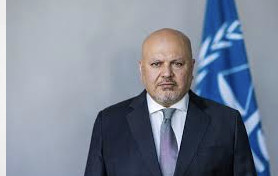
International Criminal Court (ICC) Prosecutor Karim Ahmad Khan has sought arrest warrants for Taliban Supreme Leader Mullah Hibatullah Akhundzada and Chief Justice Abdul Hakim Haqqani to hold them accountable for gender-based crimes in Afghanistan. While the ICC’s actions signal international awareness of the Taliban’s abuses, they are a far cry from on-the-ground justice. Stronger political support and collective actions are needed from governments, international bodies and civil society in order to delegitimise the regime and support Afghan women and girls’ rights, particularly in education and employment.
International Criminal Court (ICC) Prosecutor Karim Ahmad Khan has moved to hold Taliban leaders accountable for the persecution of women, girls and non-gender conforming individuals in Afghanistan. His investigation formed the basis for allegations that Taliban leaders are responsible for crimes against humanity under article 7(1)(h) of the Rome Statute, specifically for gender-based persecution across Afghanistan since 15 August 2021.
Through more than 100 decrees, the Taliban has restricted women and girls’ fundamental rights to physical integrity and autonomy, education, political and civic participation, in addition to freedom of movement, expression and assembly. As pursuing accountability for gender-based crimes in Afghanistan is a key priority for the ICC, Khan has requested arrest warrants for Taliban Supreme Leader Mullah Hibatullah Akhundzada and Chief Justice Abdul Hakim Haqqani before the ICC’s Pre-Trial Chamber II on the Situation in Afghanistan.
The ICC Prosecutor’s Taliban arrest warrants are an overdue yet powerful action. In a country where global political shifts have historically sealed the fate of regimes — from the Soviet-backed era to the collapse of the Republic of Afghanistan following the US–Taliban 2020 agreement — international actions are closely watched and often spark widespread reactions across Afghan society.
The ICC’s move signals that at least one arm of the international legal system is observing and documenting the Taliban’s abuses. In a war-weary nation where survival often hinges on adapting to shifting power dynamics, this signal may embolden civic actors who continue to resist Taliban rule in quiet yet defiant ways.
While the ICC’s action is a step towards holding the Taliban accountable, they will not change Taliban policy toward women and girls, and Taliban’s top leaders are highly unlikely to be brought to justice in the Hague.
Justice under international law is notoriously slow, often unfolding over years or decades while civilian victims suffer under oppressive regimes. Under the Afghanistan Pre-Trial, charges have yet to be confirmed and a trial date set. The absence of a robust international monitoring mechanism inside Afghanistan undermines efforts to document abuses to inform state actions and bring legal accountability.
Diplomatic actions to hold the Taliban accountable are vital. But countries like Iran, Pakistan and Russia have normalised relations with the Taliban. Some Western nations, such as Norway, also continue to engage with the regime under the banner of ‘inclusive dialogue’ and ‘peacebuilding’, detracting from international legal pressure.
A decentralised grassroots campaign led by Afghan women has also been advocating for the codification of gender apartheid under the Crimes against Humanity Treaty under consideration at the United Nations General Assembly. Gender apartheid is the systematic gender-based oppression that subjugates women and girls, violating their fundamental human rights. Recognition of gender apartheid under a new treaty could provide a universal foundation for preventing widespread state-sanctioned oppression of women and girls.
The Rome Statute provisions do not criminalise gender apartheid but the ICC arrest warrants support the anti-gender apartheid international campaign. A UN Crimes Against Humanity Treaty codifying gender apartheid as a crime would be more universal and far-reaching than the ICC’s jurisdiction. But the treaty discussions have been pushed to 2027 — demonstrating the inertia of international legal reform and leaving Afghan women abandoned. Without coordinated political responses, international law alone cannot bring accountability in Afghanistan.
Read more
International Criminal Court targets Taliban crimes against women