Book review: The Law and Practice of Human Rights published by Lexis Nexis
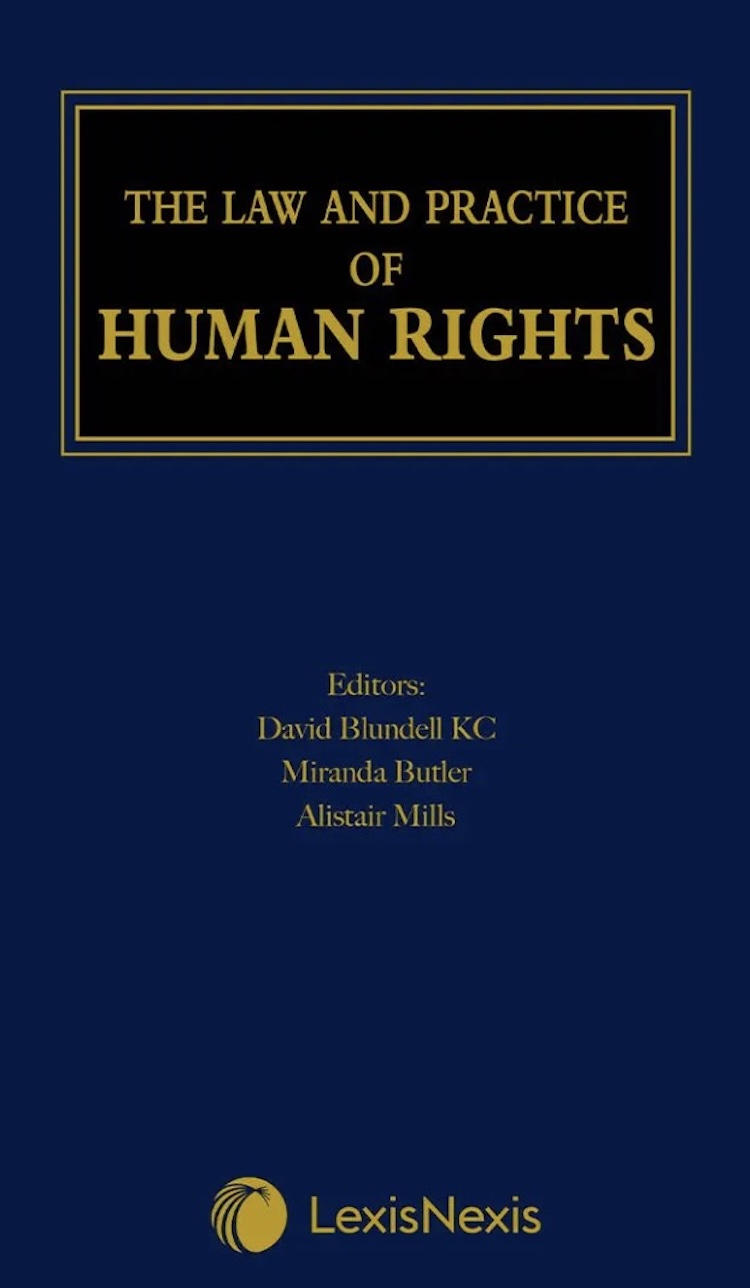
Panicking about a Christmas present for the human rights lawyer in your life? Landmark Chambers have you covered with the excellent “The Law and Practice of Human Rights”. This is the first (presumably of many) edition and is a huge achievement that was turned around in an impressively quick period – all 1,300 pages of it – in time for the official launch on the 25th anniversary of the Human Right Act on 2 October 2025.
I went to the conference on the day and spoke to many of the contributors, who were rightly proud of their achievement with this book. You can see a full list of authors here.
The book has chapters covering the history and international context of human rights protection in the UK, the Human Rights Act 1998 and the domestic role of the European Convention on Human Rights, principles of interpretation of the Convention, and devolution. There is also a chapter on remedies and damages.
Each article of the Convention has its own dedicated chapter, with applicability to immigration cases woven throughout. Also covered in these chapters is the position at common law for each of the rights protected under the Convention.
Looking specifically at the main chapters of relevance to immigration practitioners, the chapter on article 3 includes looking at medical treatment and deportation, third country processing and cases where there is a risk of suicide if a person is removed from the UK. There is also a section on the relationship between article 3 and the Refugee Convention.
The article 4 chapter has a section on trafficking including the issues arising in and following the prolonged KTT litigation on the interplay between asylum and trafficking claims (specifically, grants of discretionary leave, most recently covered by me here) and the then Home Secretary’s subsequent unlawful response (my write up is here). At the end of the chapter is an interesting look at the prohibition of slavery at common law, which includes the history of slavery in Britain before 1835.
On article 5, the run through of the relevant cases includes consideration of the compatibility of section 12 of the Illegal Migration Act 2023 with article 5(1)(f). It is pointed out that the new provisions sit uneasily with the Hardial Singh principles and are arguably incompatible with article 5. This analysis is useful given we are still rather lacking in reported decisions on the point.
There is a section on immigration and citizenship in the chapter on article 8 which covers both domestic authorities as well as the major judgments out of Strasbourg looking at family and private life claims involving migrants. The book sets out the attempts by the government to codify article 8 in the immigration rules as well as in primary legislation. The section 55 duty for immigration functions to be discharged with regard to “the need to safeguard and promote the welfare of children” in the UK is covered here too.
There is also a really useful chapter on the practicalities of taking a case to the European Court of Human Rights, as most of us don’t do that sort of thing very often. It covers the practice directions, standing, starting a claim, all the way through to the always important costs and expenses.
Hopefully some of you have been good enough for Santa to put a copy under your tree, otherwise you’ll just have to buy it for yourself. Long may it remain relevant.