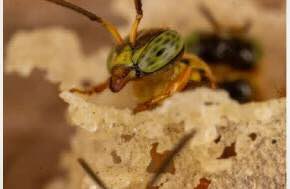
Last year, a municipality in Peru granted Amazon stingless bees legal rights, the first time in the world that insects have been recognized as legal subjects. Earth.Org spoke with biologists and lawyers to understand why these tiny pollinators matter so much, and what could change for these bees, both within their immediate surroundings and globally.
—
In October 2025, a municipality in Peru made legal history. The municipal government of Satipo granted Amazon stingless bees the status of subjects of legal rights – in other words, it recognized that the stingless bees, native to the Peruvian Amazon, now have the right to exist and flourish. The move, resulting from a collaborative effort between scientists, Indigenous communities, and environmental lawyers, marked the first time insects have received such recognition anywhere in the world.
The new municipal law, Ordinance No. 33, does not single out the protection of one species – in this case stingless bees. Instead, it recognizes their close-knit relationship with local Indigenous communities, particularly the Asháninka, as well as with the Amazon ecosystem as a whole. These legal recognitions reflect both the build-up and parallel processes behind these advocacy efforts and underscore the interconnectedness between stingless bees, Amazonian biodiversity, and the ancestral beekeeping practices and sustainable economic development of Indigenous communities.
Chemical biologist Rosa Vásquez Espinoza of Amazon Research Internacional (ARI), who is also a National Geographic Explorer and advocate for biodiversity research and conservation in the Amazon rainforest, was the leading player in this conservation battle, aided by legal experts from the Earth Law Center. Earth.Org spoke with them about their journey to ensure the protection of Amazon stingless bees, why Indigenous leadership became central to the project, and what impact their initiative is already having, both locally and globally.
The Bees and the People
Stingless bees, or meliponines, are a diverse species of bees, characterised by the lack of a functioning stinger. There are more than 600 different species of stingless bees living across tropical and subtropical regions worldwide, of which at least 175 have been found in the Amazon. Unlike their European cousins, the honey-making bee (Apis mellifera), which was brought to the Americas by settlers in the 1800s, stingless bees are native to the Americas and perform critical ecosystem services there.
In these lush, remote parts of the Amazon rainforest in Peru, Indigenous communities like the Asháninka and Kukama-Kukamiria have lived alongside the Amazon stingless bees for millennia. For these communities, as well as many other Indigenous communities of the Amazon, stingless bees are not just part of their immediate surroundings. “They are part of our family and our ancestors,” said César Ramos, President of EcoAsháninka, an organization representing 25 Indigenous communities in Peru.

Through ancestral knowledge passed down through generations, these communities have learned how to care for the bees and collect their honey, which is said to contain magical properties, earning them the nickname “angelitas” (English for “little angels”). Some learned how to locate wild hives in the rainforest – in itself a very intricate endeavor – while others carried tree trunks with the hives home, keeping them behind their houses, in a rustic beekeeping set-up. This close-knit relationship not only mutually aided them but also benefited the ecosystem as a whole, as these angelitas represent an absolutely vital link in the local habitat, pollinating more than 73% of cultivated and native edible plants in the Amazon.
As climate and environmental pressures continue to grow, wild stingless bees are, however, becoming increasingly difficult to find, even for the Asháninka. According to local Indigenous rangers of the Asháninka Communal Reserve, spotting a wild hive, which used to take up to 30 minutes, can now take hours – and it is not always a guarantee. Because meliponines are key indicators of ecosystem health, their gradual disappearance reflects the wider deforestation and drying of the Amazon.
First Steps
In 2020, Rosa Vásquez Espinoza was in the midst of her PhD research in chemical biology in the US when the Covid-19 pandemic hit. At the time, her colleagues in Peru informed her that Indigenous communities were using stingless bees’ honey to treat the virus’ symptoms.
Read the full article
Ancestors of the Amazon: Inside the Battle to Grant Legal Rights to Stingless Bees