Kluwer
By Brian Craig, J.D.
The duration of the licensing agreement could be implied until the copyrights in the works ceased generating publishing royalties because they fell into the public domain.
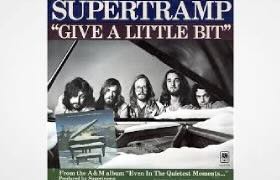
In a breach of contract case over rights to songs performed by the rock band Supertramp, the U.S. Court of Appeals for the Ninth Circuit has reversed the decision of a district court after a jury trial and held that two former band members were entitled to royalties against their erstwhile band mates and the music publishing company. The panel held that the federal district court in Los Angeles incorrectly ruled that the band members and music publishing company defendants were entitled to unilaterally terminate the agreement after a “reasonable time.” Applying California state law, the federal appeals court held that the duration of the licensing agreement could be implied until the copyrights in the works ceased generating publishing royalties because they fell into the public domain (Thomson v. Hodgson, No. 24-2858 (9th Cir. Aug. 20, 2025)).
Douglas Thomson, John Helliwell, and Robert Siebenberg, former members of the rock band Supertramp, brought a breach of contract action against their former bandmates Rodger Hodgson and Rick Davies, as well as Delicate Music, a sub-publishing company formed by Hodgson and Davies in the federal district court in Central California. In 1977, the parties entered into a publishing agreement (“the 1977 Agreement”), which allocated specific percentages of songwriting royalties among the band members and their manager. The band had some hits in the 1970s and 1980s, including “Goodbye Stranger.” In 2018, Hodgson and Davies—Supertramp’s principal songwriters—abruptly stopped paying the songwriting royalties to the former band members. The ensuing dispute proceeded to a jury trial, during which the district court ruled that the defendant band members and publishing company were legally entitled to unilaterally terminate the agreement after a “reasonable time.” The jury then found in favor of the defendant band members and publishing company. The plaintiff former band members appealed.
Contract duration. The Ninth Circuit reversed the decision of the district court and held that the duration of the licensing agreement could be implied when the copyrights in the works ceased generating publishing royalties because they fell into the public domain. The panel explained that California courts conduct a three-step analysis to determine a contract’s duration. First, courts examine whether the contract contains an express duration. Second, if the contract does not contain an express duration, courts ask whether one can be implied from the nature and surrounding circumstances of the contract. Third, if the contract contains no express or implied duration, the court construes the duration to be a reasonable time.
In this case, the panel agreed with the district court that there was no express duration to the contract. But in the second step, the appeals court held that the duration of the contract could be implied. The district court improperly found that because the contract contains no express duration, and there was no evidence of an implied duration based on the surrounding circumstance, the defendant band members and publishing company were legally entitled to unilaterally terminate the agreement after a reasonable time. The Ninth Circuit concluded that a duration could be implied: when the copyrights in the works ceased generating publishing royalties because they fell into the public domain.
The appeals court held that the defendant band members and publishing company had a continuing obligation to share songwriting and publishing royalties with their former band members in accordance with the percentage allocations set forth in the 1977 agreement, so long as such royalties continued to exist.
Predispute and postcontracting conduct. The panel also concluded that the parties’ predispute, postcontracting behavior showed that the 1977 Agreement was not terminable at will. Under California law, a party’s predispute and postcontracting conduct is powerful evidence of that party’s intent and understanding of the contract at the time it entered into the agreement.
In this case, the panel found that the parties’ predispute, postcontracting behavior, and the nature and circumstances of the contract, were consistent with a mutual understanding that the 1977 Agreement was not terminable at will. The most obvious point at which the 1977 Agreement would have been terminated had the defendants truly believed it to be terminable at will was when Hodgson left Supertramp in 1984. Based on trial testimony, his exit from the band was not amicable. Rather, Hodgson testified that he felt that he was “forced out.” But rather than terminate the royalty payments to the plaintiffs to receive a percentage of the publishing revenue moving forward, Hodgson instead reaffirmed his contractual obligation to the plaintiff band members. The panel pointed to several other examples of predispute, postcontracting behavior that were inconsistent with Hodgson’s purported belief that he had the right to terminate the 1977 Agreement at will.
Therefore, the Ninth Circuit held that the district court erred in finding that the 1977 Agreement was unilaterally terminable after a “reasonable time.” The Ninth Circuit remanded the case to the district court to enter judgment in favor of the plaintiff former band members on the issue of liability.
The Case is No. 24-2858.
Judge: Wardlaw, K.
Attorneys: David L. Burg (Mandavia Ephraim & Burg LLP) for Douglas Campbell Thomson, John Anthony Helliwell, and Robert Layne Siebenberg. Robin Meadow (Greines Martin Stein & Richland LLP) for Charles Roger Pomfret Hodgson, a/k/a Roger Hodgson and Delicate Music.
Companies: Delicate Music
Cases: Copyright AlaskaNews ArizonaNews CaliforniaNews HawaiiNews IdahoNews MontanaNews NevadaNews OregonNews WashingtonNews