CNA
Lawyers and experts weigh in on why both civil and criminal court cases have shot up – and the implications for Malaysia’s justice system.
KUALA LUMPUR: For 11 years, Nurul Nashua Baharuddin has painstakingly built her reputation as a makeup artist painting one face at a time. But today, the 33-year-old – who hails from Tangkak in the southern Malaysian state of Johor – is swapping her makeup brushes for a legal brief.
Fed up with what she described as “irresponsible statements” by a photographer that have led to a wave of client cancellations, Nurul has started to take legal action.
She has spent time collecting screenshots of purportedly defamatory messages that form the backbone of a letter of demand (LOD) served to the photographer, whom she alleged questioned her professionalism and quality of service as a makeup artist.
An LOD is a letter setting out a list of demands for the recipient to comply with and is typically sent by lawyers on behalf of their clients. It usually threatens legal action if the demands are not satisfied within a period of time.
“When my livelihood is threatened and the trust I’ve built with my clients is compromised, I have to act,” Nurul told CNA.
“I don’t want to go to court as it’s a drain on time and money, but I feel I have no choice but to seek justice through the legal system. I’m not sure if I will get it, but I will try.”
For now, Nurul is waiting for a response to her LOD from the other party. If she proceeds to file a suit – which she believes might be highly likely at this point of time – she will join a rapidly growing number of Malaysians turning to the judiciary to settle personal and professional disputes.
In his speech at the opening of the legal year on Jan 12, Chief Justice of Malaysia Wan Ahmad Farid Wan Salleh noted that the country’s economic development and evolving societal dynamics have led to a sustained increase in case filings.
He said that between 2021 and November 2025, civil case registrations rose from 303,335 to 483,933 cases – an increase of 59.54 per cent over the period. At the same time, criminal case registrations rose from 1,522,005 to 2,486,567 cases, representing an increase of 63.37 per cent.
“These figures reflect a structural trend rather than a temporary surge. Looking at it positively, a more litigious society is a society that has faith in its judiciary,” Wan Ahmad had said then.
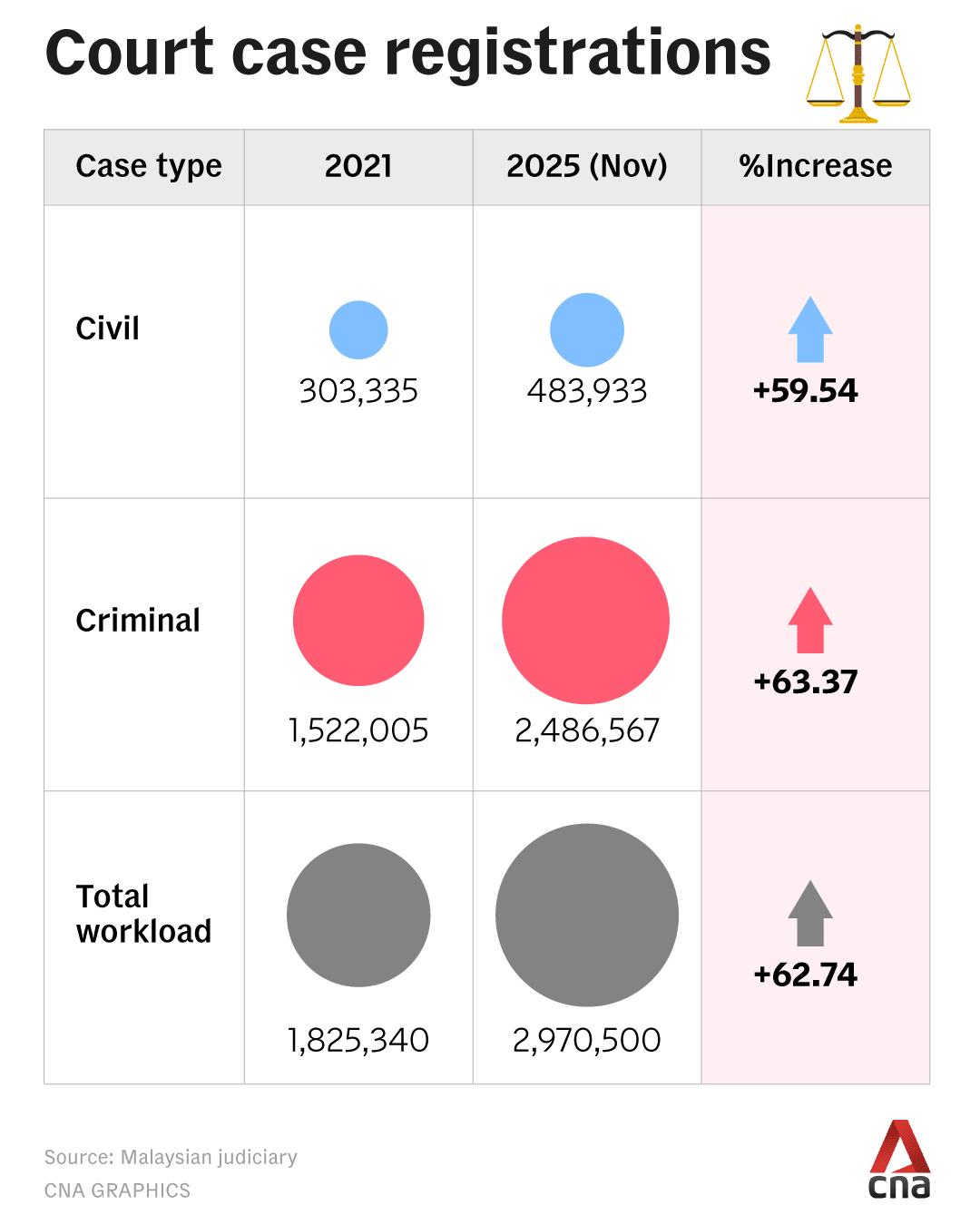
Those in the legal field whom CNA spoke to said that the surge in the number of cases is unsurprising, with former Court of Appeal judge Mah Weng Kwai saying that this was a common development seen in most developing countries.
“As the standard of education increases, more people know their rights. If there is a dispute, they don’t fight in the street; they know where they stand legally, and that naturally leads them to the courtroom,” said Mah, who retired from the bench in 2015.
He added that the rise in caseloads also meant that the number of courts and judges in the country should be increased proportionately, echoing the statement that had earlier been made by Wan Ahmad who called for more institutional support from the government.
Read More
https://www.channelnewsasia.com/asia/malaysia-judiciary-lawyers-litigation-shortage-labour-5926181