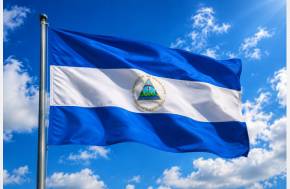
Together with a coalition of international and regional human rights organisations, Lawyers for Lawyers (L4L) has joined a joint statement condemning the arbitrary disbarment of at least 2,000 lawyers in Nicaragua. The full statement reads as follows:
The regime of Daniel Ortega and Rosario Murillo has arbitrarily removed numerous lawyers and notaries from the registry of the Supreme Court of Justice, without official notification, prior proceedings, or publication of the corresponding decree in La Gaceta (the Official Gazette). According to reliable estimates, the measure has affected at least 2,000 individuals, who have effectively been disbarred and prevented from practising their profession. For many of them, this decision amounts to a genuine “professional death sentence.”
Most of those affected remain in Nicaragua, although some legal professionals are currently living in exile. This latest measure appears to be part of the government’s strategy to eliminate spaces for the independent practice of law and to exclude those it considers political opponents or individuals not aligned with its interests.
The gravity of this decision has been recognized and denounced by international human rights mechanisms. Both the Group of Human Rights Experts on Nicaragua (GHREN) and the United Nations Special Rapporteur on the Independence of Judges and Lawyers have condemned the measure, warning that it constitutes a serious attack on the independence of the legal profession and the rule of law.
These actions are incompatible with Nicaragua’s international human rights obligations. In particular, they violate guarantees enshrined in the International Covenant on Civil and Political Rights (ICCPR), including the right to a fair trial and to legal assistance of one’s own choosing (Article 14), as well as the right to an effective remedy for human rights violations (Article 2(3)). Furthermore, the United Nations Basic Principles on the Role of Lawyers establish that States must ensure that lawyers are able to perform all of their professional functions without intimidation, hindrance, harassment, or improper interference (Principle 16); that they are not subjected to or threatened with administrative or other sanctions for acting in accordance with their professional duties (Principle 17); and that disciplinary proceedings are conducted before an independent and impartial body, with full respect for due process guarantees (Principle 28).
Beyond its direct impact on legal professionals, this decision seriously undermines access to justice for broad sectors of the population. Without a free and independent legal profession, thousands of people are deprived of their right to legal representation and to effective judicial protection. In particular, women seeking justice for gender-based violence may be left without legal assistance and representation.
Nicaragua: Human rights organisations condemn the arbitrary disbarment of at least 2,000 lawyers
The International Bar Association’s Human Rights Institute (IBAHRI) condemns the Nicaraguan government’s mass revocation of lawyers’ and notaries’ licences to practise, warning that the measure violates fundamental safeguards governing the independence of the legal profession and deprives citizens of their rights to independent legal representation.
In recent weeks, reports indicate that around 2,000 lawyers and notaries across Nicaragua and in exile have discovered that their licences have been suspended, preventing them from practising. Many affected lawyers reportedly did not receive any prior notification and discovered that their names and registration numbers had been removed only when they had attempted to file documents or appear before a court. Others learned of the measure through changes to the Supreme Court of Justice’s electronic registry. No prior notice or opportunity to be heard was provided to the affected lawyers, and no official explanation or legal basis for the removals has been made public.
The measure has reportedly affected lawyers both inside Nicaragua and living abroad, including, not only practitioners who are known critics of the Ortega-Murillo government, but also lawyers practising in apolitical areas such as family law and others not publicly identified with political opposition. In some cases, clients of the affected lawyers have received a notification that state authorities have appointed new ex officio lawyers to represent them.
|
|
A direct attack on the independence of the legal profession
The IBAHRI considers the mass removal of lawyers’ credentials to be fundamentally incompatible with the safeguards that must govern disciplinary action against members of the legal profession.
Under Principles 26–29 of the United Nations Basic Principles on the Role of Lawyers, disciplinary proceedings against a lawyer must be based on established codes of professional conduct and other recognised standards of the legal profession and must be determined through fair proceedings before an impartial disciplinary committee established by the legal profession, independent statutory authority or court, and shall be subject to judicial review. The reported wholesale removal of professional credentials without notification, stated grounds, a hearing or an avenue for independent review therefore raises serious concerns under these international standards and suggests an act of political control and deterrence rather than a legitimate regulatory measure.
The UN Group of Human Rights Experts on Nicaragua (GHREN) has similarly warned of a ‘silent purge of the legal profession’, describing the measure as a further escalation in the dismantling of the rule of law and warning of its consequences for the right to legal defence; notably, by removing citizens’ rights to legal defence altogether.
|
|
| Mark Stephens CBE, IBAHRI Co-Chair, commented: ‘Stripping lawyers of their licences without explanation or any right of reply is incompatible with the most basic safeguards of professional discipline. It is a calculated attempt to remove one of the last professional groups capable of defending citizens’ rights. A judiciary without independence, and a legal profession unable to practise, leave people in Nicaragua with no recourse whatsoever. The international community must not allow this to pass without response.’
Hina Jilani, IBAHRI Co-Chair, said: ‘An independent legal profession is indispensable to the rule of law. When lawyers can be removed from practice without due process, clients lose an essential safeguard against arbitrary state action. This is a serious assault on access to justice and marks a further step of authoritarian rule.’
|
|
Part of a wider erosion of the rule of law
The mass revocation of lawyers’ licences comes against the backdrop of a broader pattern of eroding access to justice in Nicaragua.
The IBAHRI notes that the measures follow the authorities’ restructuring and consolidation of control over state institutions, including the judiciary. It also follows constitutional changes that strengthened executive control over other branches and state bodies. On 19 July 2026, President Daniel Ortega stated publicly that Nicaragua would hold no further elections, effectively closing off the electoral process that had been expected in November 2027, removing even the veneer of a constitutional mechanism for a change of government.
|
|
Loss of independent legal representation creates an accountability vacuum
The livelihoods of the many lawyers affected are at serious risk as they have no means of continuing their professional activities or objecting to the measure. The impact of the measure extends beyond the violation of individual rights. An independent legal profession is a precondition for the rule of law and for the ability of ordinary citizens to access justice, challenge state action and assert their rights before courts and other authorities. Where judicial independence has already been weakened, eliminating or controlling independent legal representation leaves an accountability vacuum in which abuses of power face no possibility of legal challenge; further reducing the avenues available to individuals seeking legal redress.
|
|
IBAHRI calls for immediate action
The IBAHRI calls on the Nicaraguan government to:
- immediately reinstate the professional credentials of lawyers and notaries affected by the measure, unless an individual case is determined through a lawful, transparent and independent disciplinary process;
- ensure that all disciplinary proceedings concerning lawyers are made in accordance with the UN Basic Principles on the Role of Lawyers, including the rights to a fair hearing and independent judicial review;
- guarantee the independence of the legal profession and the judiciary, free from political interference; and
- ensure that individuals in Nicaragua retain effective access to legal representation of their choice, including the ability to challenge state action before an independent and impartial tribunal.
The IBAHRI further calls on governments, regional and international organisations, bar associations, law societies and other legal professional bodies to raise this matter with the Nicaraguan authorities, support lawyers who have been disbarred or forced into exile and use available diplomatic mechanisms to press for the restoration of an independent legal profession and effective access to justice in Nicaragua.
|
|