What are Fordham Law’s legal minds reading this summer?
From a provocative psychological analysis of “WEIRD” (Western, Educated, Industrialized, Rich, and Democratic) societies to classic science fiction to a sweeping history of Mexico, Fordham Law faculty share the books they look forward to diving into this season.
Aditi Bagchi
Ignatius M. Wilkinson Chair, Professor of Law
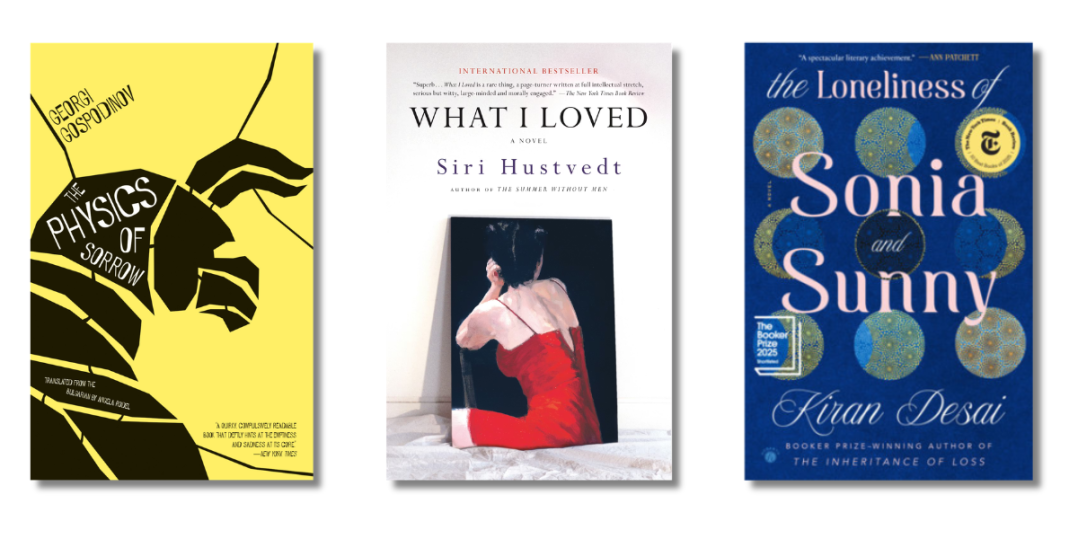
Three books I plan to read this summer were written by authors I know from their other work: Georgi Gospodinov’s The Physics of Sorrow, Siri Hustvedt’s What I Loved, and Kiran Desai’s The Loneliness of Sonia and Sunny.
The Physics of Sorrow is supposed to be a labyrinthine journey through memory loosely based on the myth of the Minotaur. The description sounds like it could be spectacular or terrible but I’m banking on the former because I read Time Shelter by the same author. Gospodinov has the voice of a witty and eccentric friend telling a long story over dinner. I expect that he will make the weirdness work.
Ever since I took a college course on art theory, I’ve been intrigued by the art world, which seems full of fabulous people with extravagant ideas to whom I cannot relate at all. The closest I’ve come was Siri Hustvedt’s The Blazing World, which immerses the reader in the ideas and love of art through a collection of quirky characters that make the making of art seem familiar and human but the art no less fantastic for it.
I found Desai’s The Inheritance of Loss mostly just ok as I was reading it, but the joy of the last scene is seared in my mind, all the more so because of all the slow-burning grief that preceded it. Now, in The Loneliness of Sonia and Sunny, I want to see what Desai has to say—or can show us—about the grief and joy one finds inside one’s own head.
Norrinda Brown
Associate Dean for Experiential Education and Director of Clinical Programs
Martin Gelter
Professor of Law
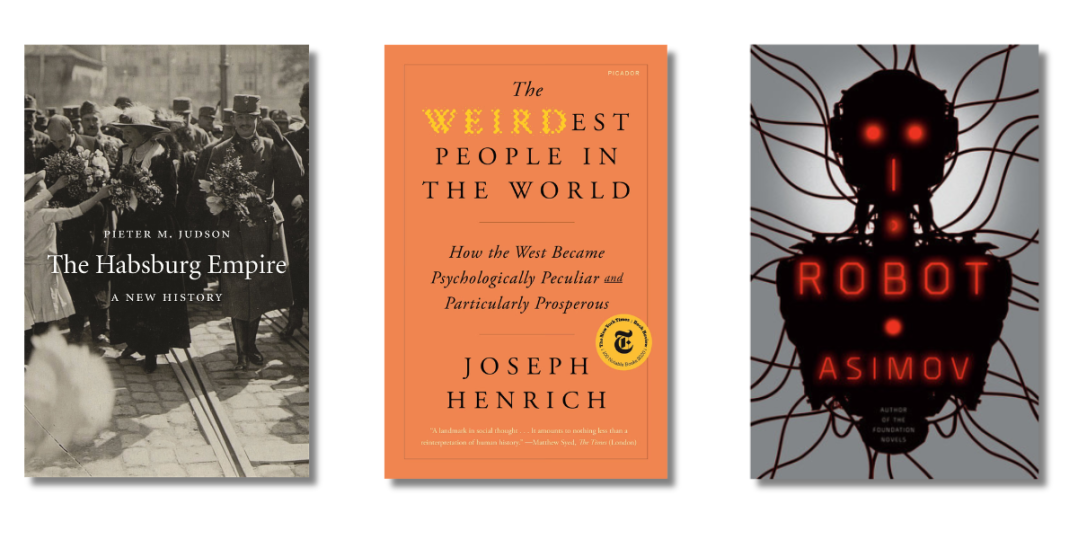
I have read mainly non-fiction in recent years. One book I recommend is The Habsburg Empire: A New History by Pieter Judson (an American teaching at the European University Institute in Florence), which covers the period from Maria Theresa through the end of World War I. Even as a historically interested Austrian, I discovered many perspectives in the book that I did not know about, including political and economic details that are not often discussed. Judson dispels many of the predominant nationalist narratives about Central European history, especially the post-1918 perception of an empire doomed by linguistic and cultural divides.
Another book I found fascinating is The WEIRDest People in the World: How the West Became Psychologically Peculiar and Particularly Prosperous by Harvard anthropologist Joseph Henrich. It suggests that the Catholic Church had a profound impact on psychology in Western societies, and, ultimately on social, economic, and cultural institutions by shaping the rules on marriage and kinship practices in the Western world since the early Middle Ages. Henrich argues that this history explains why people in “WEIRD” (Western, Industrialized, Educated, Rich, and Democratic) often appear psychologically distinct from the rest of the world when tested on dimensions such as individualism.
While I read Isaac Asimov’s Foundation series many years ago, I have never read his Robot series. I plan to remedy this deficiency because the famed three laws of robotics prefigured debates that we are having in the age of AI. Asimov’s vision of permitting artificial intelligence constrained by built-in guardrails seems more appealing than the one espoused in another classic sci-fi series, namely Frank Herbert’s Dune books, where thinking machines are outlawed following a conflict known as the Butlerian Jihad.
Jamie Grischkan
Associate Professor of Law
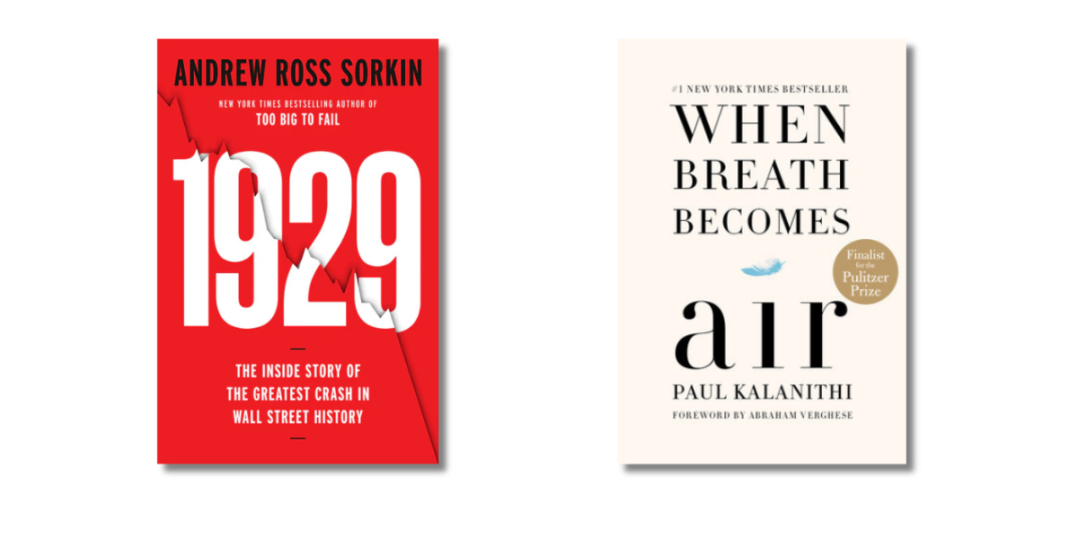
This summer, I’m looking forward to reading Andrew Ross Sorkin’s 1929: Inside the Greatest Crash in Wall Street History—And How It Shattered a Nation. Capturing the feverish rise and catastrophic fall of the American economy in the fateful 1920s, Sorkin’s narrative offers not only a window to the past but lessons for the present. As a historian of American financial regulation, I’m eager to dive into this riveting account of one of the most devastating and consequential events of the twentieth century.
I also plan to read Dr. Paul Kalanithi’s poignant memoir, When Breath Becomes Air. Kalanithi was a talented young neurosurgeon when he was suddenly diagnosed with lung cancer. Detailing his heart-wrenching transformation from doctor to patient, Kalanithi offers a searing and moving reminder of the importance of cherishing each day and savoring time with loved ones.
Thomas Lee
Leitner Family Professor of International Law
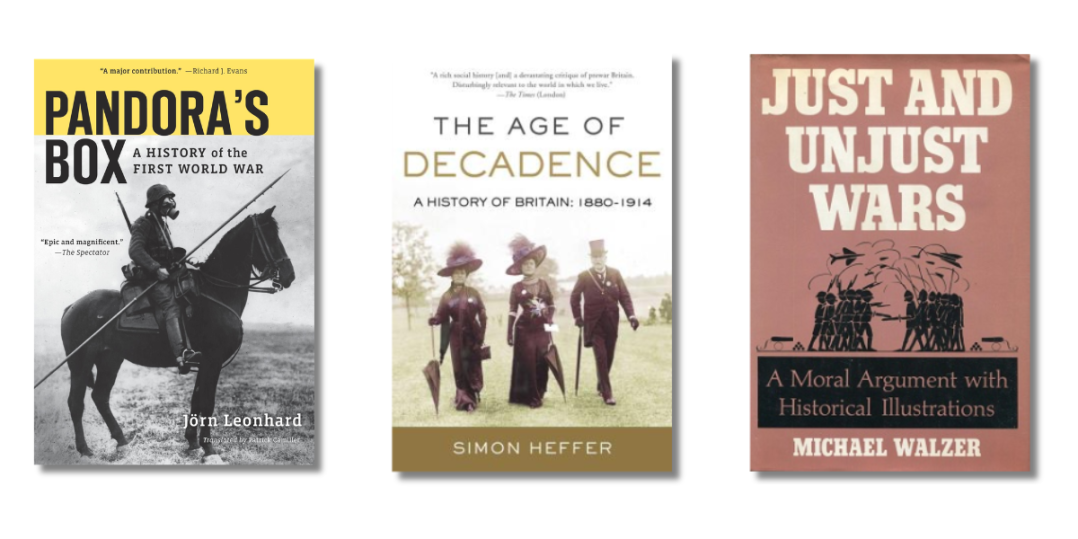
A book I highly recommend is Jorn Leonhard’s Pandora’s Box: A History of the First World War (translated by Patrick Camiller). It shows how World War I reshaped the world and marked the end of the European world order. Leonhard stitches together both the Western and Eastern fronts, technology, colonialism’s and capitalism’s contradictions, and international and domestic politics in readable prose that the translator effectively conveys.
A book I’m currently reading is Simon Heffer’s The Age of Decadence: A History of Britain: 1880-1914. I loved his book High Minds: The Victorians and the Birth of Modern Britain, and am greatly enjoying his account of the late Victorian and Edwardian era—imperial and gilded on the outside, rotting and teetering on the inside. Both books seem highly timely today.
As I contemplate summertime research and writing about what the laws of war mean today, I’m planning to reread—for the 10th time—the post-Vietnam moral philosopher Michael Walzer’s Just and Unjust Wars.
Ian Weinstein
Professor of Law
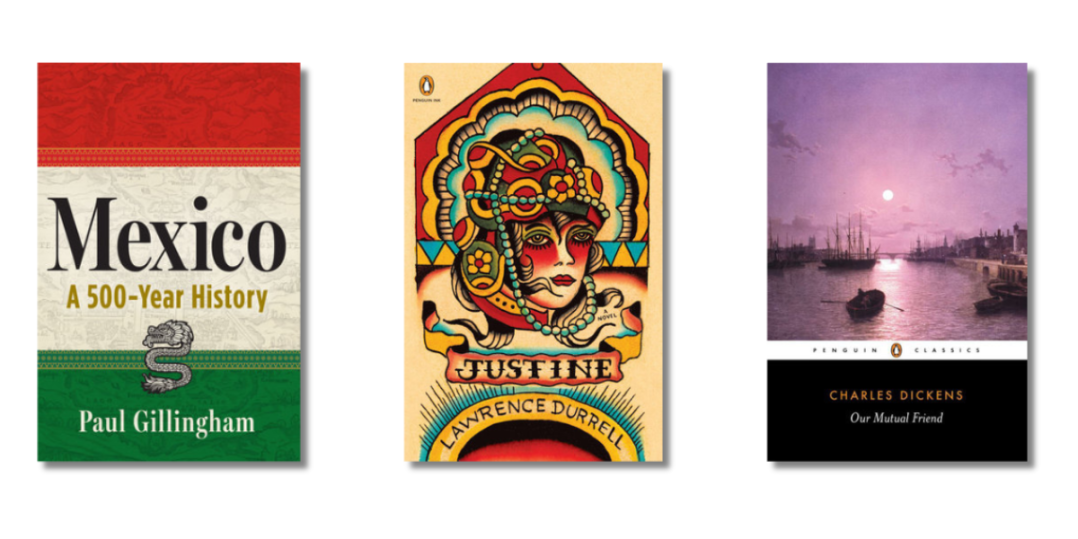
Paul Gillingham’s Mexico: A 500-Year History reminds us how our southern neighbor’s modern history was shaped at the intersection of powerful, complex indigenous cultures and the Spanish Empire’s brutal take on righteousness. The perfidy of the 16th-century Spanish conquistador Hernán Cortés makes for a gripping narrative and is among the first of the linked chapters of narratives and perspective through which Gillingham, as he describes it, circles, and repeatedly reimagines the same history, all the while maintaining a stable superstructure of causal hypotheses. The book is deep and broad, the sort of work in which one can get lost at the beach or in a good long before bedtime read on a summer night when it’s just you, the text, and the crickets.
I look forward to starting Lawrence Durrell’s Justine, the first book in a four-novel series in which the same events are revisited from different perspectives. I first encountered Durrell in a footnote in Paul Gillingham’s Mexico. The quote was about multiple truths and the kaleidoscopic understanding of consciousness that animated so much of the literary and therapeutic discourse of the later 20th century.
I am confident I will be very pleased to spend time with Charles Dicken’s, Our Mutual Friend. Every lawyer, I think, should know Jarndyce and Jarndyce, the eternal lawsuit from Bleak House. While that civil litigation is perhaps the best example of his ability to make the law a vivid character in so many of his works, I think Dickens is at his best in debtor’s prisons and in the criminal law world of Courts of Assizes in which the judge could don the black cap. Our Mutual Friend features yet another dispute over an inheritance, but greed being what it is, there is a murder along the way and much to interest a lawyer with a weakness for the English reform movement, all served with a healthy dollop of his trademark sentimentality. Arguably, the Victorians commodified leisure at the beach, so Dickens really goes with the whole umbrella, towel, and sunscreen thing. Happy reading.
https://news.law.fordham.edu/blog/2026/06/10/what-fordham-law-faculty-are-reading-this-summer/