
On April 24, the U.S. Department of Justice (DOJ) released a report proposing an expansion of the federal death penalty, including adding firing squad, electrocution, and lethal gas as execution methods. The DOJ characterizes the Biden Administration’s moratorium on executions as ?“an unprecedented break from the [DOJ]’s longstanding approach to the death penalty,” while casting this new effort as a return to form. The DOJ further claims that the three alternative methods of execution have a ?“long history of use” and that ?“the Supreme Court has found [each] to be consistent with the Eighth Amendment.”
However, historical and legal context suggests the opposite is true: federal executions under the first Trump Administration were the exception to a long period of decline; most states had abandoned the suggested execution methods due to concerns about pain and botched executions; and the Supreme Court has not recently or meaningfully engaged with these troubling critiques.
History of the Federal Death Penalty
The DOJ report offers a simple timeline: between 1789 and 2021, the DOJ ?“consistently upheld its obligation to seek and implement capital sentences,” until the Biden DOJ ?“abandoned its obligation.” The data, including the DOJ’s own statistics, shows a more complicated history.
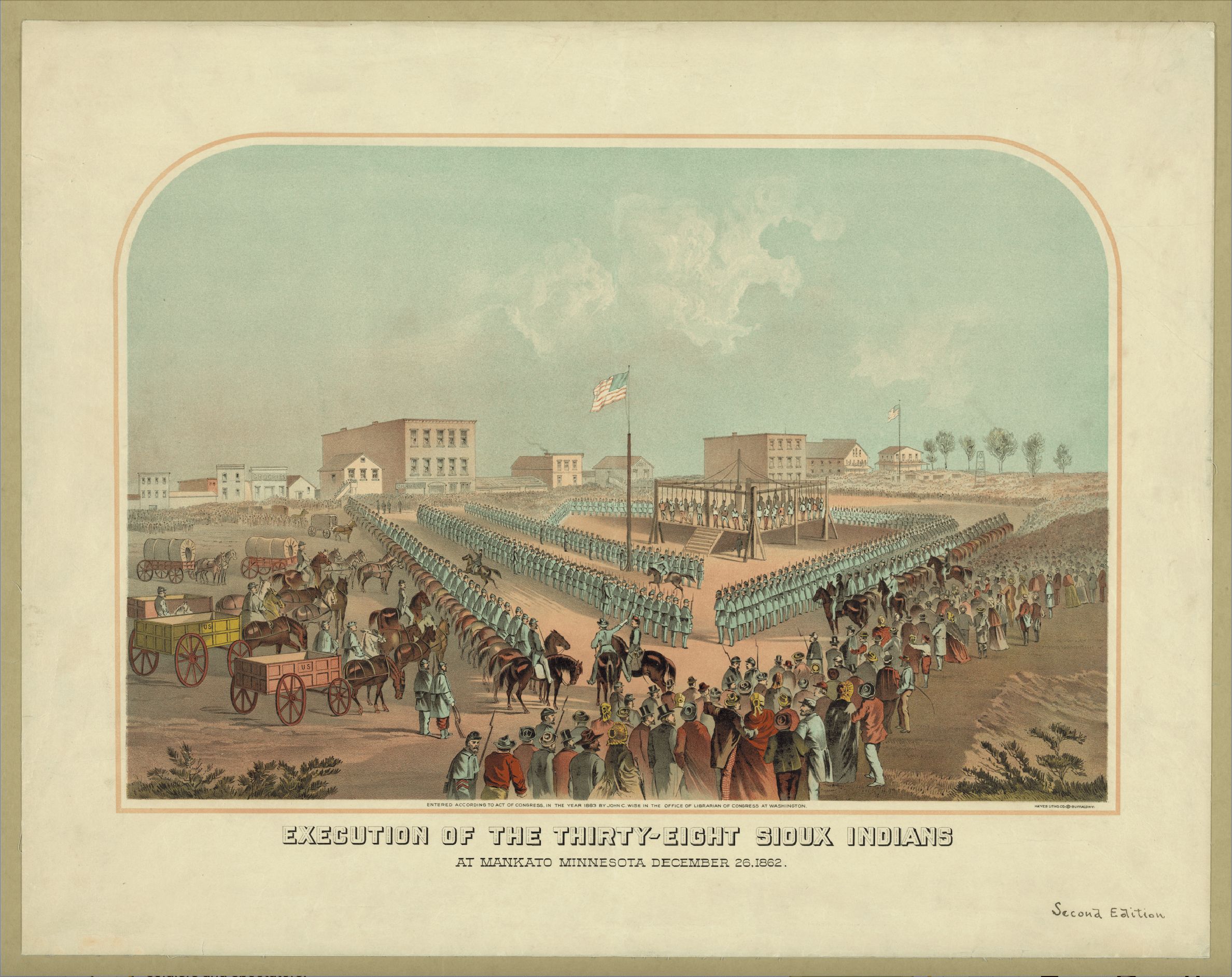
Mass Execution of Dakota Sioux, Minnesota, 1862. Wikimedia Commons.
The federal death penalty was often used in the first century of the republic, but was disproportionately applied against Black and Native American people. For example, the federal government conducted a mass execution of 38 Dakota Sioux tribal members in 1862. These disparities carried into the 20th century: from 1900 to 1963, 76% of federally executed individuals were Black men.
Between 1963 and 2001?—?nearly four decades?—?the federal government conducted no executions. For 16 of those years (1972?–?1988), there was no federal death penalty on the books. While the number of federal death sentences increased from 1988 through the 1990s in tandem with national ?“tough on crime” trends, executions did not match that pace. In the early 2000s, the government executed three people before entering another long period of inactivity.
In this context, the 13 federal executions conducted in the waning days of the first Trump Administration deviated from the historical trend, while the Biden Administration’s moratorium followed decades of de facto pauses in the punishment. The DOJ report’s own data reveals wide variations in the number of authorized capital cases, including dozens of subsequent decisions to drop the death penalty, with a visible decline in capital prosecutions over the past two decades before the start of the second Trump Administration.
Firing Squad
To support its use at the federal level, the DOJ report characterizes the firing squad as a ?“historically common” execution method. While the DOJ correctly notes that the firing squad has a ?“long history,” used as early as 1608 in the Jamestown Colony, that history is a narrow one. A review of American executions from 1608 to 1976 found only 141 shooting executions out of 14,489 total, a mere 1%. Since 1976, the firing squad has accounted for just 6 of 1664 (0.4%) executions. Just two states, Utah and South Carolina, have used the firing squad in the modern era.
The ?“practice has historically been more closely associated with the military than with civilian prisoners,” the New York Times noted in 2025. The firing squad was used on occasion during the American Revolution and Civil War to punish soldiers for desertion. According to Professor Mark Smith of the University of South Carolina, the soldier was typically brought in front of a crowd and blindfolded, sometimes even ?“sitting on his own coffin,” to create a ?“public spectacle, a vision of terror.”
The firing squad has also been marked by racial and geographic disparities associated with the American West. About 40% of historical civilian firing squad executions were of Native Americans. Two-thirds occurred in just three states: Utah, Oklahoma, and California. All but two (92%) of the firing squad executions in Oklahoma were of Native Americans.
The DOJ report also proposes adoption of the firing squad on the basis that the U.S. Supreme Court has upheld the method. Indeed, the Court found in Wilkerson v. Utah (1878) that the firing squad was not cruel and unusual punishment?—?the first time the Court ever applied the Eighth Amendment in a capital punishment context. However, that was also the first and last time the Court directly considered the constitutionality of the firing squad. The modern Court acknowledged in 2008 that the Wilkerson Court’s analysis was ?“simpl[e]”: the justices found it ?“safe to affirm” that certain medieval tortures were unconstitutional, but it was otherwise “[d]ifficult…to define with exactness” which punishments violated the Eighth Amendment. Because the firing squad was not as gristly as drawing and quartering, emboweling alive, and burning at the stake, they reasoned, it was constitutional. The Court has never evaluated the firing squad under the robust ?“evolving standards of decency” test that became the cornerstone of Eighth Amendment jurisprudence in the 20thcentury.
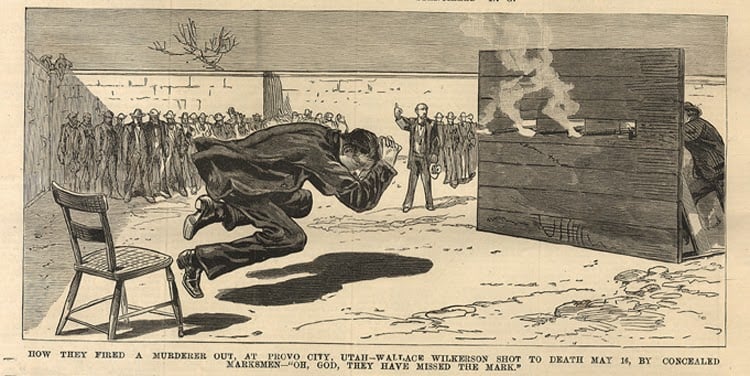
Execution of Wallace Wilkerson, Utah, 1879. Public Domain.
After losing at the Supreme Court, Wallace Wilkerson sat before a team of men in Provo, Utah Territory, on May 16, 1879. (Utah would not become a state for another two decades.) The firing squad missed his heart. He was thrown out of his chair, writhing on the ground; witnesses reported that he yelled, ?“Oh, my God! My God! They have missed!” He bled for nearly 30 minutes before he was pronounced dead.
In recent years, as states struggled to obtain lethal injection drugs?—?a trend the DOJ blames entirely on ?“activists,” despite the fact that major pharmaceutical companies have uniformly refused to provide their products for use in executions?—?some have turned back to the firing squad. Idaho became the first state to authorize the firing squad as its primary method and is nearing completion on a new $1 million execution facility. In 2025, South Carolina conducted the first firing squad executions in 15 years; the autopsy of one man, Mikal Mahdi, found only two of three intended bullets, both of which missed his heart.
Electrocution
The DOJ report similarly relies on the established history of electrocution to call for its adoption at the federal level, noting that it ?“has been used in the United States…since the late 1800s” and was the ?“predominant method of execution” until 1972. The DOJ also points to the Supreme Court’s 1890 decision upholding the electric chair, and its 1947 decision authorizing a second execution attempt for a prisoner who had survived a botched electrocution.
Yet the brief three-paragraph section offers few details about that history?—?most importantly, that the Court found the electric chair constitutional before it had ever been used to put a human being to death. The method was proposed by a dentist in the 1880s amidst the ?“war of the currents,” as Thomas Edison raced against competitor George Westinghouse to develop electric power technology. The system was tested on dogs and horses before the state of New York slated prisoner William Kemmler as the first to die. The Supreme Court rejected his appeal in In re Kemmler (1890), holding that “[p]unishments are cruel when they involve torture or a lingering death,” when they are ?“inhuman and barbarous.” The Court affirmed the lower court’s finding that the evidence had ?“remove[d] every reasonable doubt that the application of electricity to the vital parts of the human body…must result in instantaneous, and consequently in painless, death.”
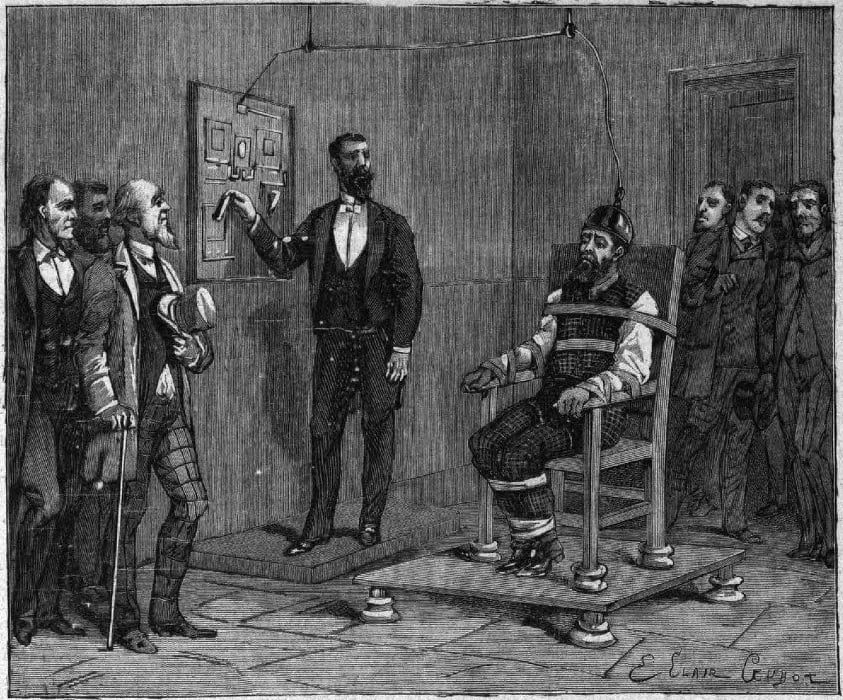
Execution of William Kemmler, as depicted by Ernest Clair-Guyot, Une exécution par l’électricité à New-York, 1890. Wikimedia Commons.
The New York Times reported what happened next under the headline ?“Far Worse Than Hanging: Kemmler’s Death Proves An Awful Spectacle.” The first jolt only rendered Mr. Kemmler unconscious, and officials were forced to wait to recharge the generator. The second jolt caused his blood vessels to rupture and the area around the electrodes to singe. According to the Times, the ?“stench was unbearable” and one witness fainted while another ran from the room. The Times wrote that Mr. Kemmler became a ?“sacrifice to the whims and theories of the coterie of cranks and politicians.” He suffered ?“a death so fearful that people throughout the country will read of it with horror and disgust,” and academics and scientists who observed the execution ?“almost unanimously sa[id] that this single experiment warrants the prompt repeal of the law.”
He died this morning under the most revolting circumstances, and with his death there was placed to the discredit of the State of New-York an execution that was a disgrace to civilization. Probably no convicted murderer of modern times has been made to suffer as Kemmler suffered.
Nonetheless, the electric chair was adopted and used in hundreds of 20th-century executions, including the infamous executions of George Stinney, Sacco and Vanzetti, and the Rosenbergs. The electric chair continued into the modern era of the death penalty, accounting for 163 executions since 1972, or about 10%. Yet it declined with the advent of lethal injection and new reports of gruesome botched executions. (The DOJ acknowledges only that ?“other methods of execution have since become more prevalent.”) In the 1990s, the heads of two Florida prisoners caught on fire, with flames reaching as high as a foot. One of them, Jesse Tafero, was still alive until the third electric shock.
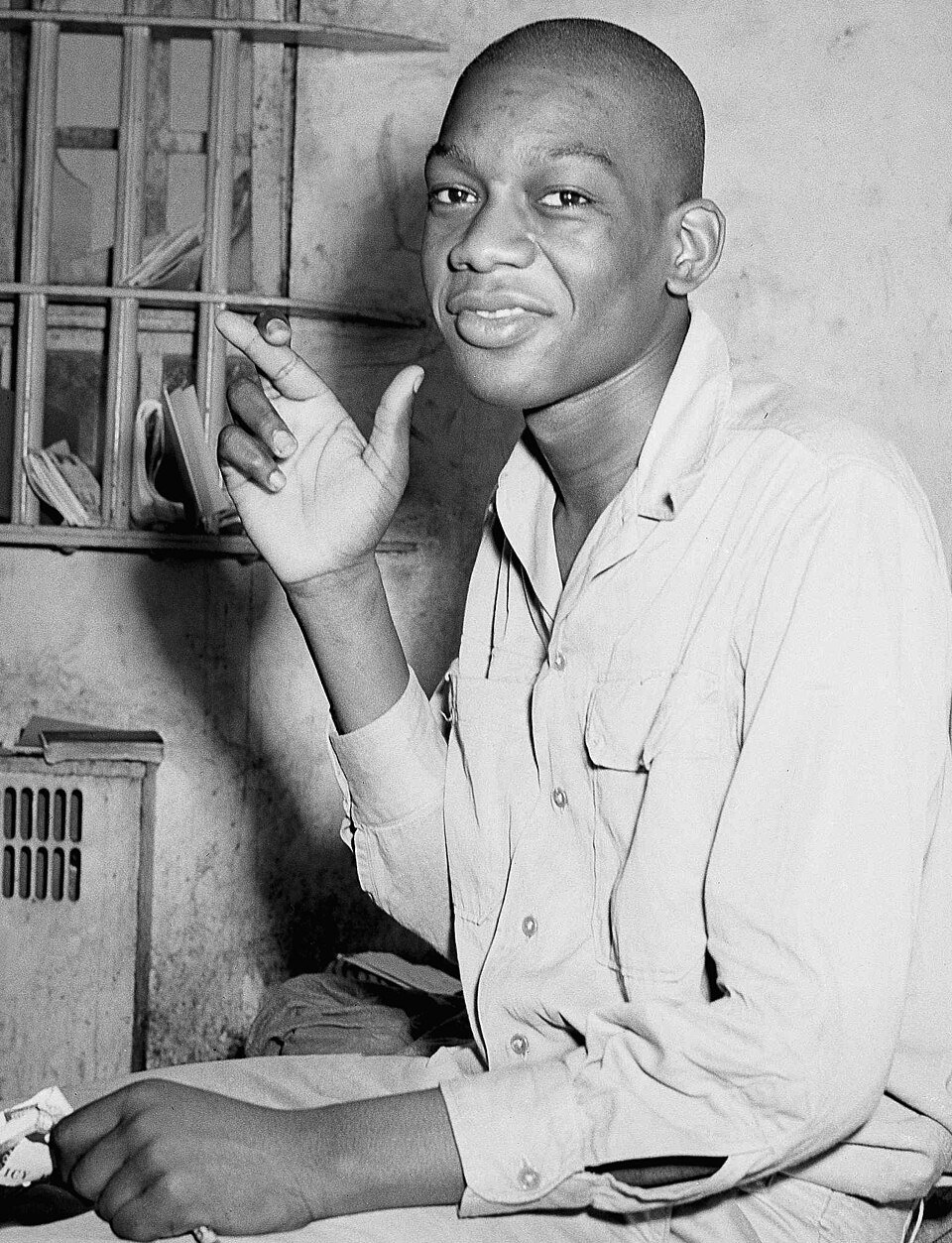
Willie Francis After Botched Execution, 1946. Photo by Bill Allen for the Associated Press. Wikimedia Commons.
In the past decade, only five prisoners have died in the electric chair?—?2% of all executions. The Georgia and Nebraska Supreme Courts have both ruled that the method is cruel and unusual under their state constitutions.
As with the firing squad, the Supreme Court has never evaluated whether electrocution comports with our ?“evolving standards of decency” under the Eighth Amendment. Indeed, its most recent decision on the topic, Louisiana v. Francis ex rel. Resweber (1947)?—?which the DOJ report cites approvingly?—?predates the development of that standard. The DOJ also omits troubling details of that case. Louisiana prisoner Willie Francis was just 17 when he survived a botched execution in an electric chair miswired by a drunken guard and another prisoner. He would not be eligible for the death penalty today based on his age. The Supreme Court rejected his plea that he should not face a second execution attempt and allowed the state to put him to death.
read more