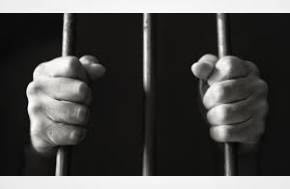
(NEW YORK) – PEN America is sounding the alarm on a deepening global crackdown on free expression, reporting in its Freedom to Write Index – released today – that more than 400 writers are behind bars for the first time since the Index launched in 2019.
In 2025, a total of 401 writers were jailed across 44 countries – up from 375 writers in 40 countries the year before. Over the past seven years, the number of jailed writers worldwide has risen by 68 percent, underscoring a steady and alarming escalation in the suppression of dissent.
China remains the world’s leading jailer of writers, with 119 cases – making it the only country to exceed 100 writers held behind bars. The sharpest increase came from Iran, where authorities carried out 17 new arrests, driving numbers back toward the peak levels seen during the 2022 ‘Woman, Life, Freedom’ protests. The spike signals a renewed and aggressive campaign to silence critical voices.
“In a year of surging arrests of writers worldwide, Iranian authorities stand out for their especially fierce campaign against independent voices,” said Karin Deutsch Karlekar, PEN America’s director of writers at risk. “Poets, translators, scholars, singer-songwriters, online commentators, human rights advocates, and columnists are all being ensnared in Iran’s jails as the government moves to stifle debate and dissent.”
The escalating suppression in Iran intensified in the aftermath of the June 2025 war with Israel, sweeping up both newly targeted writers and long-persecuted dissident voices. Among those arrested were online commentator Hossein Ronaghi, who was detained in June; a group of scholars and translators detained in November, including economists Parviz Sedaghat and Mohammad Maljoo, sociologist Mahsa Asadollanejad, and writer and translator Shirin Karimi; and human rights defenders and authors Narges Mohammadi and Sepideh Gholian, who were violently re-arrested while speaking at a memorial service in December.
Repression During War
Iran was one of three countries among the top 10 jailers of writers that were simultaneously engaged in armed conflict in 2025, along with Russia and Israel/Occupied Palestinian Territory. Authorities in these three countries repeatedly targeted writers who used anti-war language or themes in their poetry, music, scripts, commentaries, articles, or literary output, a key pattern that emerged in the 2025 data.
In Israel/Occupied Palestinian Territory, six writers have been detained by the Israeli government over anti-war statements. Palestinian writers and commentators Mohamed Al-Atrash, Nawaf El-Amer, Radwan Qatanani, Rula Hassanein, and scholar Anwar Rostom were detained on charges of incitement or with no charges at all, in addition to Jewish-Israeli journalist and commentator Israel Frey who was investigated for terrorism, because of their commentary on the war, the genocide, and the occupation.
In Russia the government held 18 writers in prison or detention in 2025, most targeted for their anti-war expression or suspected involvement in anti-war activity. In March, a Russian military court sentenced historian and columnist Alexander Skobov to 16 years in prison for his anti-war posts on social media. Other writers opposed to the war have fled into exile to avoid prosecution or jailing for their dissenting viewpoints.
For the past seven years, the PEN/Barbey Freedom to Write Center has tracked and verified reports of writers jailed or threatened for what they wrote, said, or created. Any case in which the writer was held for at least 48 hours is included in the Index for that year. Since the Index was launched, the number of jailed writers has risen every year: 238 in 2019, 273 in 2020, 277 in 2021, 311 in 2022, 339 in 2023, and 375 in 2024, culminating in 401 in 2025.
Overall, the top 10 top jailers of writers are China and its autonomous regions, including Xinjiang, Tibet, and Hong Kong (119); Iran (53); Saudi Arabia (27); Vietnam (24); Türkiye (22); Israel and the Occupied Palestinian Territory (21); Russia (18); Belarus (17); Egypt (13); and Myanmar (10).
New Offenders
Several countries appeared in this year’s Index for the first time including Togo, Mozambique, and the United States. The U.S. case centers on the weeks-long detention of Sami Hamdi, a British opinion writer and columnist, who was detained in what PEN America views as part of the U.S. government’s weaponization of Immigration and Customs Enforcement (ICE). Hamdi, an outspoken critic of Israel, was on a speaking tour and had just attended a conference when ICE officers stopped him at San Francisco International Airport and held him in custody for two weeks.
“The fact that the United States is in our Freedom to Write Index for the first time should be a sharp wake-up call for everyone in the country who claims to value free expression,” said Liesl Gerntholtz, managing director of the Freedom To Write Center. “No government can misuse its own detention and immigration systems to silence or intimidate independent voices and call itself a democracy.”
Broader Threats
Broader threats are also escalating. Alongside the Freedom to Write Index, the Writers at Risk Database tracks other forms of persecution, including murder, enforced disappearance, and displacement/exile. This year, for the first time, the database surpassed 1,000 active cases, documenting 1,059 in 83 countries including 53 cases of murder, 13 of disappearance, and 170 in which writers were either displaced or forced into exile because of their work or their identity as a writer.
“Writers reflect on the present, imagine different futures, and use their voice to hold power to account,” said Karlekar. “An attack on even one writer is a warning to everyone else that our freedoms to think critically, create, and dissent are in danger. We must continue to raise our voices in solidarity and demand that all writers jailed for their work be freed immediately.”
Below please find a brief summary of trends in each of the top 10 countries. For more information and to download the full report visit the 2025 Freedom to Write Index.
No. 1: China*
The worst offender, China has consistently been at the top of the Index for the seven years it has been compiled, and writers have to deal with a highly restrictive and punitive system with little scope for free expression. Publishers too face increasingly harsh restrictions and rely on self-censoring in order to avoid being put in prison. Manchu publisher Li Yanhe was sentenced to three years in prison under charges of “inciting secession.” China has also increased its global reach – often crossing borders to silence critics or suppressing minority voices in its autonomous regions. Lhamjab Borjgin, an ethnic Mongolian writer, was kidnapped from his residence-in-exile in the independent country of Mongolia in 2023. Swedish citizen and Hong Kong-based publisher Gui Minhai was kidnapped in 2015 in Thailand, and has been held in China ever since. His daughter has not received any updates on his well-being since 2020. Writers Xu Zhiyong and Ilham Tohti, two Freedom to Write Award Honorees, continue to serve draconian prison sentences for their written commentary: Xu, a 14-year sentence, and Tohti, life in prison. Both writers have been restricted from communicating with their loved ones, and Tohti has been jailed incommunicado since 2017.
* Including autonomous regions
No. 2: Iran
Iran remained at second place in this year’s Index, but the alarming uptick of writers jailed – from 43 to 53, a 23 percent increase, shows that war and inner turmoil have worsened the treatment of writers, and increased the Iranian government’s relentless crackdown on dissenting speech. Iran’s parliament passed a new bill to allow for harsher punishments for “espionage” and collusion with Israel and other states regarded as hostile, provisions which were used to charge some writers, and jailed dissidents’ wellbeing was also threatened by the June 2025 Israeli airstrike on Evin Prison. In August, raids targeted several writers and translators affiliated with the leftist Samandar Press, and in November, a group of progressive scholars and translators were briefly detained. Ethnic minorities and women remained particularly at risk, and Iran continued to jail the highest number of female writers worldwide – with 32 percent of its writers in prison being women vs a global average of 16 percent. Writer and 2026 PEN/Barbey Freedom to Write Award Honoree Golrokh Ebrahimi Iraee, serving multiple sentences under charges of “collusion” and “propaganda” related to her expression and activism, continues to advocate for human rights from Evin Prison.
No. 3: Saudi Arabia
Saudi Arabia ranks third this year, as it did in the previous Index, with 27 writers jailed in 2025. These writers face long sentences, incommunicado detention, and the deliberate weaponization of vague anti-terrorism statutes against writers, bloggers, and online commentators. At least six of the writers were held in pretrial detention for six years or more – effectively putting them in indefinite detention without trial. In June, Saudi Arabia executed journalist Turki Al-Jasser, who had been detained for seven years on charges related to national security including “funding terrorism.” His detention stemmed from his alleged authorship of an anonymous social media account that exposed corruption within the royal family.
No. 4: Vietnam
Vietnam, in fourth place with 24 writers in jail, continued to routinely misuse laws – including the Penal Code and cybersecurity laws – to imprison writers. In early 2025 Truong Huy San, author of The Winning Side (Bên Th?ng Cu?c), was sentenced to 30 months in prison under Article 331 for “abusing the rights to freedom and democracy.” Jailed writers are also routinely denied medical care. Online commentator Le Huu Minh Tuan’s health deteriorated to the point that he could no longer eat solid foods and struggled to walk while the government failed to provide adequate healthcare. The health of writer, journalist, and 2024 PEN/Barbey Freedom to Write Award Honoree Pham Doan Trang also declined as she has repeatedly been denied medical attention during the fifth year of a nine-year prison sentence.
No. 5: Türkiye
Türkiye saw the number of writers jailed increase from 18 in 2024 to 22 writers this year – placing it back in the top five. The Turkish government continued its longtime practice of prolonged, indefinite trials and spurious charges of “insult” against the President in order to target writers and journalists. Journalist Furkan Karabay, who has previously faced multiple legal cases and detentions, was sentenced to nearly a year in prison for “defamation” and “insulting the president” in April 2025. Turkish authorities also deployed broad misinformation threats and charges, as well as anti-terror legislation, against critical voices and continued its crackdown on minority artists and musicians.
No. 6: Israel**
In 2025, Israel continued its suppression of Palestinian and non-Palestinian dissenting voices, with the number of writers in jail during the year remaining at 21. This overall figure is unchanged from 2024, but some writers were released in broad prisoner amnesties, while others were newly jailed. The majority of writers were from the Occupied Territories, and were being held in repeated cycles of administrative detention. Of the 21 writers jailed at some point during the year, 20 were Palestinian journalists and writers, and one was an Israeli writer and journalist targeted for his commentary related to war and criticism of the Israeli government. At least six of the writers were jailed by Israeli authorities for anti-war statements in their work.
** Including the Occupied Palestinian Territory
No. 7: Russia
In 2025, Russia held 18 writers in prison or detention – unchanged from 2024’s figure – most for their anti-war expression or their suspected involvement in it, continuing a trend that began in 2023 following the full-scale invasion of Ukraine. Most of the writers counted behind bars were already in custody at the start of 2025, and several were sentenced or had their sentences upheld during the year. Like terrorism charges, authorities continue to weaponize foreign agent and extremist designations to suppress and heighten the cost of dissent, punishing even exiled writers.
No. 8: Belarus
Throughout 2025, Belarus held 17 writers in jail, a combination of longer-term detainees and several individuals newly arrested during the year. Writers and artists are commonly targeted with “extremism” charges or accused of “defaming the president,” “inciting discord,” and “organizing actions against public order,” showing that the crackdown on dissent following Aleksander Lukashenka’s illegitimate election of 2020 continues. Of the 17 cases counted in 2025, 15 writers had been released at the time of this report’s publication, either in the September or December 2025 mass releases of prisoners, or in early 2026, including Nobel Laureate Ales Bialacki, journalist and writer Katsiaryna Andreyeva, and scholar and writer Uladzimir Matskevich. Despite these ostensible gestures toward change, these developments do not signal political reform. Many of the political prisoners who were released were forcibly deported, pushing them into the limbo of an uncertain and indefinite exile, and the government continues to jail new targets at a similar rate in a cycle that human rights defenders describe as a “revolving door.”
No. 9: Egypt
In 2025, Egypt held 13 writers in jail. Charges of “disseminating false news” and “misuse of communication tools” are routinely weaponized against writers, compounded by sweeping anti-terrorism provisions that are applied arbitrarily to criminalize speech. 11 out of the 13 writers in detention have not been tried yet, underscoring Egypt’s signature tactic of “rotation,” meaning that detainees are charged in new cases to override release orders and acquittals. Critics are held indefinitely as a result. Poet and 2025 PEN/Barbey Freedom to Write Award Honoree Galal El-Behairy has been jailed for more than eight years despite completing a three-year prison sentence because the government has repeatedly brought new charges against him. Travel bans and post-release conditions are a defining feature of how Egypt restricts formerly imprisoned writers. Even after blogger and activist Alaa Abd El-Fattah was released in September 2025, Egyptian passport control officers refused to allow him to travel to the United Kingdom. The travel ban was lifted in December and he was able to join his family in London.
No. 10: Myanmar
The overall environment for free expression and human rights in Myanmar remained grim in the fifth year following the February 2021 coup, with 10 writers in jail during 2025. Writers, intellectuals, and other creative artists have played a key role in opposing military rule, and many of the jailed writers included in the Index, such as writer and activist Wai Moe Naing, were arrested in the months following the 2021 coup. They have remained in prison after being charged under a range of laws and sentenced – in some cases to extraordinarily long prison terms. Many others have fled into exile in neighboring countries or further afield for their own safety and to avoid almost-certain arrest.