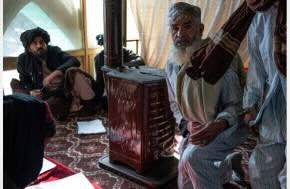
After the fall of the Islamic Republic, the newly empowered Islamic Emirate radically overhauled the courts and the criminal justice system, elevating sharia as the sole source of law, along with the mullah-judges who now interpret Islamic jurisprudence. Defence lawyers, whose role is to protect the interests of the accused, have been marginalised, their professional body dissolved, work permits revoked and an examination of their knowledge of Islamic jurisprudence now required to obtain a new licence. Their ability to practice is also limited, with judges sometimes seeing their legal arguments as an insult to their own earning. Women are denied access to the profession, although some have found creative ways to continue practicing. AAN’s Hamed Pakteen, with contributions from Rachel Reid, has been hearing from lawyers about their experiences in Emirate courts.
In most legal systems, the right to self-defence is a fundamental principle for a fair trial, with defence lawyers playing a crucial role in protecting the accused, particularly in the confusing arena of a courtroom. In the courts of the Islamic Emirate of Afghanistan (IEA), power has swung into the hands of religiously-trained judges, whose decisions are framed as rooted in Islamic jurisprudence (fiqh). Defence lawyers are a common feature of criminal justice systems in many Muslim majority countries, but in the Emirate, they have been marginalised and their adversarial role in defending the accused is misunderstood or unwelcome, with serious consequences for fair trials and the right to self-defence.
In November 2021, just months after taking power, the Emirate took over the offices of the Afghanistan Independent Bar Association (AIBA), the professional body that governed lawyers, and put it under the control of the Ministry of Justice (Radio Azadi). It revoked the licences of thousands of lawyers, requiring them to re-licence by taking an exam, which largely tested their knowledge of sharia. Previously, knowledge of both sharia and codified laws (qanun) had been required.
Although many male lawyers did successfully re-licence, they still face problems. Those interviewed noted they were given only restricted access to documents and key parts of court proceedings, and described many judges as hostile. Female lawyers have not been permitted to re-apply for their licences. While some have found ways to offer advice to women clients, the repercussions for female legal professionals and women’s access to justice, in general, are profound.
In the courts of the IEA, the role of defence lawyers has been minimised. Interviewees told AAN they are often barred from attending their clients’ sessions in court and judicial rulings are made in their absence. They say judges often act with bias, do not allow defence lawyers to speak or defend their clients during hearings and dismiss defence lawyers as ‘uneducated’ or irreligious. Some said that if a lawyer objects to a judge’s ruling, they faced a risk of violence or imprisonment by judges who view a lawyer’s legal argument as an insult to themselves and their knowledge of jurisprudence.
This report looks at the problems faced by defence lawyers at all stages of the process, from obtaining licenses and reviewing their clients’ cases to challenges they face in the courts, including how judges often sideline or silence defence lawyers, insulting or even imprisoning them. The report examines the behaviour of Emirate judges through the eyes of the defence lawyers, from how they review cases presented in court, to the laws that they follow. We look in particular at the situation of female lawyers, now excluded from the profession, but with some managing to find creative ways to still work, and especially to support female defendants or claimants.
The research is based on nine in-depth conversations with defence lawyers, five women and four men, from Mazar-e Sharif and Kabul. Names of those inside Afghanistan have been changed for the interviewees’ security. The report also draws on various secondary sources, as well as a review of the statutes, bills and other documents related to the performance of judicial institutions of the Islamic Emirate published by the Ministry of Justice