Abstract
Marine plastic debris poses a serious threat to the global marine ecosystem and has become a pressing international concern. Given the connectivity and mobility of the oceans, the fragmented international governance further underscores the urgent need for a holistic approach. To address this fragmentation, we review the evolution of international legal frameworks for marine plastic pollution, identify prevailing challenges, and propose concrete pathways for establishing a life-cycle-based international legal regime.
ntroduction
Plastics have been integral to modern life since the 1950s, but their proliferation has resulted in severe marine pollution, jeopardizing the health of ocean ecosystems1. According to related research, roughly 80% of marine plastic debris are land-based, a consequence of inadequate waste management and recycling systems incapable of keeping pace with the rapid growth of plastic production and consumption2. Although the international community has worked on curbing marine plastic pollution, the problem continues to escalate; however, national and regional policy responses remain largely fragmented and insufficient. Against this backdrop, this paper examines marine plastic pollution governance from the background, focusing particularly on the validity of international law. It highlights the principal challenges confronting current governance frameworks and advances a life-cycle-based approach as a pathway for strengthening international legal responses.
Background
Marine plastic pollution is inherently transboundary, which not only heightens the complexity of governance but also poses new challenges to the international legal framework, including the United Nations Convention on the Law of the Sea (UNCLOS)3. Studies show growing attention to this issue, yet current global governance mechanisms remain fragmented4. Accordingly, scholars advocate a life-cycle approach by expanding the Extended Producer Responsibility (EPR) to overcome the limitations of traditional plastic pollution management5,6,7.
From the perspective of marine plastic pollution governance, plastic debris poses severe ecological threats to marine organisms through multiple pathways8,9. However, the international community still lacks a comprehensive risk assessment system10. Research has revealed systemic flaws in plastic pollution governance mechanisms across the entire life cycle11,12. It has also been argued that regional cooperation platforms, such as the Pacific Alliance, should adopt a circular economy and life-cycle approach, coordinating national and regional policies to deliver regional solutions13. From the perspective of international law, emerging global governance initiatives should align with international environmental law and operate within a complementary and mutually supportive legal framework14. Nevertheless, significant limitations persist in existing international legal and policy frameworks concerning the regulation of plastic life cycles and cooperation in governance15. Numerous studies note that traditional marine law instruments such as UNCLOS and the International Convention for the Prevention of Pollution from Ships (MARPOL) are increasingly inadequate for addressing the diverse and expanding sources of plastic pollution, and the enforcement of their relevant rules remains limited16,17,18. Furthermore, there are still debates over the effectiveness of international legislation aimed at addressing marine pollution19. For these reasons, scholars broadly advocate for a legally binding global plastics treaty, which would help address many challenges in governing marine plastic pollution20,21,22,23.
Overall, existing studies on marine plastic pollution adopt diverse perspectives, but research focusing exclusively on its governance from an international law standpoint remains limited. It is important to examine the role of international law, its challenges, and potential strategies in establishing an effective governance system for marine plastic pollution.
The international law process of governing marine plastic pollution
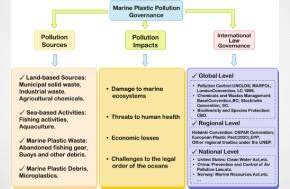
International legal regulation of marine plastic pollution governance covers the entire life cycle of plastic, rather than a few isolated norms. In this progress, international law has gradually formed a systematic framework through both “hard law” and “soft law” instruments at global, regional, and national levels (see Fig. 1).
Read full article