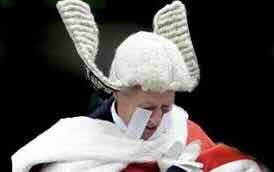
The first week of the legal term has presaged a major reshaping of the senior judiciary. On Monday, Sir Geoffrey Vos announced that he would be retiring in October as master of the rolls. On Wednesday, Dame Victoria Sharp disclosed that she too will be retiring that month as president of the King’s Bench Division. And last Friday, Lord Reed of Allermuir revealed that he would be standing down at the end of this year as president of the Supreme Court.
With Sir Andrew McFarlane retiring as president of the Family Division in April, this is an unprecedented challenge to our system of judicial appointments. It is a bigger realignment of the senior judiciary than we saw in 2000, when Lord Bingham was promoted from lord chief justice to senior law lord, Lord Woolf was moved up from master of the rolls to lord chief justice and Lord Phillips was advanced from junior law lord to master of the rolls.
Crucially, those appointments all took effect on the same day. The three-way shuffle was an inspired move by Lord Irvine of Lairg, who, as lord chancellor, was then responsible for all judicial appointments. But it cannot happen now because candidates must apply for each job individually.
Gone are the days when the lord chancellor’s long-serving, legally qualified senior officials regularly updated the files they kept on all barristers. These were locked away in cupboards fronted with chicken wire, to be consulted before a potential judge was called in for a tap on the shoulder.
The constitutional reforms announced by Tony Blair in 2003 made it impossible for the lord chancellor to continue selecting the judges. But the Judicial Appointments Commission, which took over in 2006, has not been an unqualified success.