
They are, of course, only North Americans..Here’s the first 5 – see the remainder here https://nationaljurist.com/the-25-most-influential-people-in-legal-education/
Law school deans ranked the individuals who had the greatest impact on legal education this past year — from innovators and reformers to national thought leaders.
Legal education is never static, and each year a handful of leaders help set its direction. Deans, scholars and innovators shape how schools adapt to new challenges — from access and affordability to technology, accreditation and the future of licensure. To capture who is driving those conversations, The National Jurist assembled a curated list of standout leaders and asked law school deans to rank them based on their influence over the past year. We encouraged respondents to think about who sparked new ideas, introduced reforms, inspired their peers or pushed them to see their work differently. The result is a roundup of the 25 most influential people in legal education today, highlighting the voices who are moving the field forward and redefining what leadership looks like in a changing landscape.

#1 Kellye Testy
Executive Director and Chief Executive Officer, Association of American Law Schools
Testy has spent her career at the center of legal education’s most pivotal changes. As executive director and CEO of the Association of American Law Schools, she has guided law schools through rising political pressures, debates over academic freedom, shifts in accreditation and a rapidly evolving profession. Before joining AALS, she served as president and CEO of the Law School Admission Council, where she modernized admissions and strengthened work around diversity and inclusion. Earlier, as dean of University of Washington and Seattle University, she became the first woman to lead each institution, earning a reputation as a “dean’s dean” who blends mission-driven leadership with a steady hand during uncertainty.
Today, Testy is widely seen as one of the most influential leaders in American legal education. And in conversation, it’s clear why. She brings an unusually broad view of the field — one rooted in governance, admissions, student experience and the day-to-day realities of law schools nationwide.
“I’m going to start with technology,” she said. “Technology is always a factor that changes things a lot.”
Testy sees technology as the force most reshaping how law schools operate. She noted that the rise of AI has moved law schools from hesitation to full engagement. Rather than resisting new tools, schools are now designing ways for students to use them responsibly and effectively.
“I love that turn that I’m seeing,” she said, adding that students who can bring technological fluency to clinics, firms and public-interest roles will be “able to contribute that to their clients and their firm” in meaningful ways.
Technology has also removed barriers that once held back online legal education. After the pandemic, Testy watched the national conversation shift from whether online programs were possible to what high-quality online teaching should look like.
“Good teaching is good teaching regardless of the mode that you do it,” she said.
What matters now is intentionality, outcomes and rigor — not whether a course is in a classroom or offered online.
Beyond technology, she pointed to the broadening scope of what legal education includes. Law schools once operated almost exclusively as J.D. programs. Today, many house LL.M.s, master’s degrees, undergraduate programs, online tracks and hybrid formats. Students arrive with a wider variety of academic backgrounds, ages and life experiences.
That diversity, she said, “is great because we need that breadth in law.”
Student wellness is another urgent theme emerging from deans across the country.
“There is a deep care for the student as a whole person,” she said.
The pressures of law school, combined with financial insecurity and earlier hiring timelines from large law firms, have created strain that schools are working hard to address. She’s especially concerned about how accelerated recruiting affects first-generation students who may need more time to adjust.
“When you’re first-gen, you don’t always hit the ground running,” she said. “Compressing hiring only intensifies that unevenness.”
Despite the challenges, Testy is optimistic about the next generation of lawyers. Students are entering law school “out of a desire to make the world better,” she said — a shift supported by LSAC research. They’re also more diverse and more comfortable with technology than any class before them. The task ahead, in her view, is helping students translate passion into craftsmanship.
“A desire to do justice is not the same thing as knowing how to do it,” she said. “The fundamentals — critical thinking, problem-solving, judgment — still matter most.”
Testy sees legal education as stronger than ever.
“Legal education … has never been better than it is right now,” she said.
She credits the deep, daily work happening across law schools and believes the strength of the U.S. system lies in the multitude of high-quality options available nationwide.
Even with the complexities, she said the heart of education is unchanged.
“One of the epitomes of education is that it’s supposed to inspire us to really grow as people and to think about and hear things that we may disagree with,” she said.
She emphasized the need to “cultivate diverse viewpoints, respectfully stated,” and said she believes “we can find our way with difference and civility at the same time,” but only if schools commit to the hard work of getting there.
As for the future, she’s focused on supporting the people who shape it.
“My hat’s off to all the deans that I work with every day,” she said. “They show up every day to do that important work.”
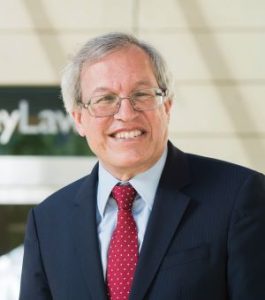
# 2 Erwin Chemerinsky
Dean, University of California, Berkeley, School of Law
Chemerinsky is one of the most influential figures in American legal education. A leading constitutional scholar, his casebooks and treatises are used in classrooms across the country and have shaped how generations of lawyers and judges understand constitutional law.
As founding dean of University of California, Irvine School of Law, he built a top-tier institution in less than a decade. At Berkeley Law, he has strengthened the school’s global reputation for academic excellence by expanding experiential learning, clinics and interdisciplinary programs. He continues to guide national dialogue on the Constitution, democracy and academic freedom — issues central to the future of legal education. His “It’s the Law” video series brings clarity to current legal questions for broad audiences, and his forthcoming 2026 book on campus speech and academic freedom underscores his commitment to open discourse in higher education.
Through his scholarship, teaching and public leadership, Chemerinsky exemplifies how legal educators can influence students and the nation’s understanding of law and democracy.

#3 Christopher Chapman
President and Chief Executive Officer, AccessLex Institute
For more than 15 years, Chapman has led AccessLex Institute’s transformation into the nation’s largest nonprofit focused on access, affordability and student success in legal education. When he became president and CEO in 2008, he guided the organization’s shift from a nonprofit lender to a national thought leader grounded in one principle: advancing student well-being.
Under Chapman’s leadership, AccessLex has launched programs that now reach nearly every U.S. law school. MAX, the financial literacy platform, serves nearly 100,000 students; AccessConnex provides one-on-one financial coaching; and JD Edge, LexCon, AskEdna and XploreJD strengthen student preparedness and career outcomes. Chapman has also been a leading voice in federal loan reform, advising lawmakers and advocating for policies that protect access for lower-income students.
He has expanded the organization’s national pipeline initiatives — LexPreLaw, LexPostBacc and LexPostBacc Direct — which have supported more than 1,200 aspiring students from underrepresented backgrounds. Through research, grants and tools like The ARC and Analytix, AccessLex continues to drive data-informed innovation across legal education.
Chapman’s vision has reshaped how law schools support financial wellness, broaden access and improve outcomes for the next generation of lawyers.
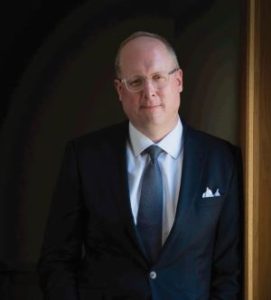
#4 Austen Parrish
Dean and Professor, University of California, Irvine School of Law
Parrish has spent more than 13 years leading law schools and advancing access, excellence and integrity in legal education. As president AALS during its 125th anniversary year this past year, he has helped guide the national conversation on the future of legal education and accreditation.
Before joining UCI Law in 2022, Parrish served eight years as dean of Indiana University Maurer School of Law – Bloomington and previously held senior roles at Southwestern Law School. At UCI Law, students twice named him Administrator of the Year (2024 and 2025), reflecting his impact on the campus community.
A respected scholar of international and transnational law, Parrish’s influence extends well beyond academia. He serves on the boards of AccessLex Institute and the Public Law Center, is a fellow of the American Bar Foundation and co-edits the Journal of Legal Education. He has been a leading national voice on access, student debt and attacks on higher education, with commentary appearing in The Hill, Bloomberg Law, Forbes and the ABA Journal.
Parrish’s blend of academic leadership, public service and advocacy makes him one of today’s most influential figures in legal education.

#5 Sudha Setty
President and Chief Executive Officer, Law School Admission Council
Setty became president and CEO of LSAC in July 2025, stepping into a national leadership role at a moment of rapid change in legal education.
She previously served as dean of City University of New York School of Law and earlier as dean of Western New England University School of Law, where she pursued structural reforms that strengthened social justice, public interest lawyering and access to legal education. At CUNY Law, Setty expanded the Pipeline to Justice initiative and founded the First Impressions Youth Legal Collaborative, which introduces middle school, high school and college students to civics, law and justice. A nationally recognized scholar in national security and comparative civil rights law, she is an elected member of the American Law Institute and practiced at Davis Polk & Wardwell early in her career.
Setty was the first South Asian American woman to lead an ABA-accredited law school and has long emphasized inclusive leadership and collaboration across institutions to advance access, equity and excellence in legal education.