Document – DOJ Maduro Indictment (pdf)
Summary
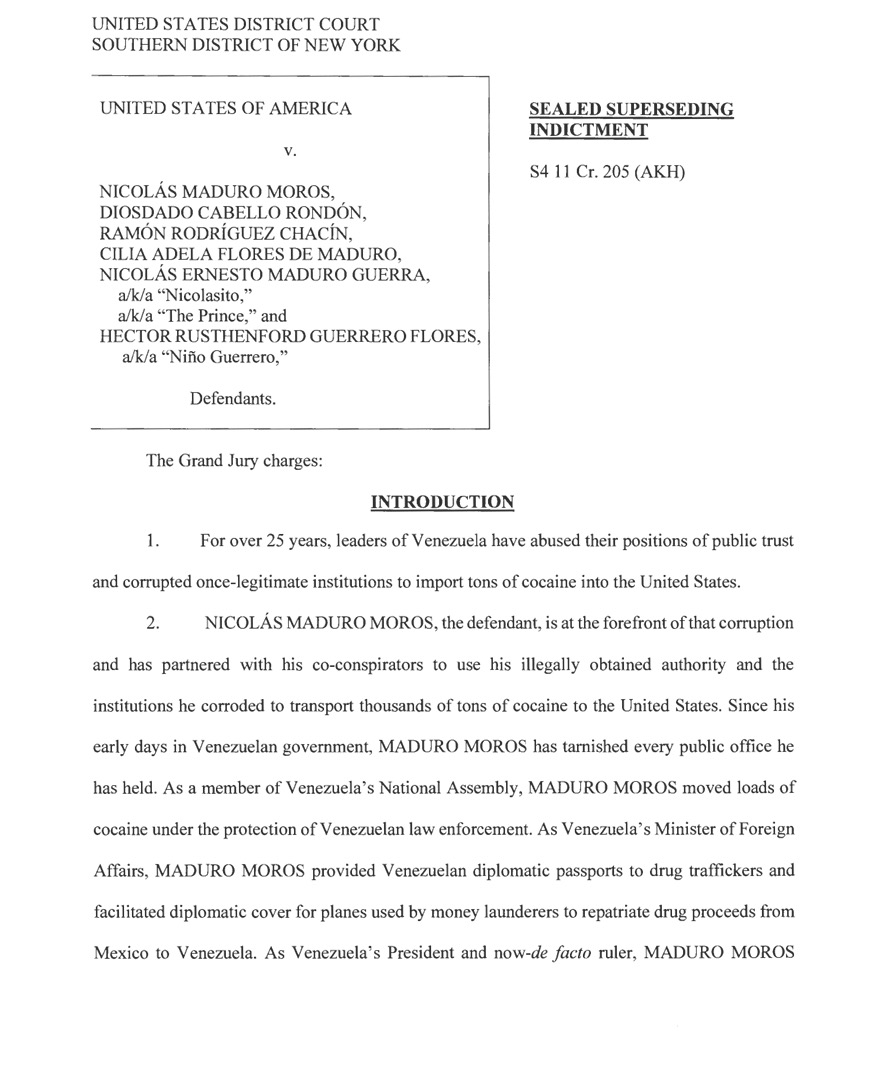
The document details a sealed superseding indictment against Venezuelan officials for drug trafficking and corruption.
Introduction to the Indictment
- The indictment outlines a 25-year history of corruption among Venezuelan leaders, particularly in drug trafficking.
- It highlights Nicolás Maduro Moros as a central figure in this corruption, using his authority to facilitate cocaine transport to the U.S.
- The indictment claims that Maduro and his associates have enriched themselves and their families through drug trafficking.
Key Defendants and Their Roles
- Nicolás Maduro Moros: Former President of Venezuela, accused of using his positions to facilitate drug trafficking.
- Diosdado Cabello Rondon: Minister of Interior and Justice, recognized as a powerful official involved in drug trafficking.
- Ramon Rodriguez Chacin: Former Minister of Interior and Justice, implicated in drug trafficking operations.
- Cilia Adela Flores de Maduro: Maduro’s wife, involved in corrupt activities and drug trafficking.
- Nicolás Ernesto Maduro Guerra: Maduro’s son, engaged in drug trafficking operations since his father’s presidency.
- Hector Rusthenford Guerrero Flores: Leader of the Tren de Aragua, involved in various criminal activities including drug trafficking.
Partnerships with Narco-Terrorist Organizations
- Venezuelan officials have collaborated with narco-terrorist groups like FARC, ELN, and the Sinaloa Cartel.
- These partnerships have facilitated the distribution of cocaine to the U.S. and have enriched corrupt officials.
- The indictment details how these organizations have operated with impunity in Venezuela, benefiting from government protection.
Drug Trafficking Operations and Methods
- Venezuela’s geographical location has made it a key transit point for cocaine trafficking.
- The indictment states that between 200 and 250 tons of cocaine are trafficked through Venezuela annually.
- Various methods of transportation are used, including maritime shipments and clandestine airstrips.
Corruption and Protection of Drug Traffickers
- The document describes a culture of corruption where Venezuelan officials protect drug traffickers in exchange for bribes.
- The “Cartel de Los Soles” is referenced as a patronage system among high-ranking military officials.
- Corruption extends to politicians in transshipment countries, who are also bribed to facilitate drug trafficking.
Specific Acts of Drug Trafficking
- The indictment lists specific acts committed by the defendants to further their drug trafficking operations.
- Examples include Maduro selling diplomatic passports to drug traffickers and facilitating the movement of drug proceeds.
- Cilia Flores is accused of accepting bribes to broker meetings between drug traffickers and government officials.
Conspiracy and Legal Charges
- The indictment charges the defendants with conspiracy to engage in drug trafficking and narco-terrorism.
- It outlines the legal framework under which these charges are made, referencing U.S. laws on drug trafficking and terrorism.
- The defendants are accused of knowingly importing cocaine into the U.S. and using firearms in furtherance of these crimes.
Forfeiture Allegations
- The indictment includes forfeiture allegations, stating that the defendants should forfeit any property derived from their criminal activities.
- It specifies that any firearms or ammunition involved in the commission of the offenses should also be forfeited.
- The U.S. government intends to seek forfeiture of substitute assets if the original property cannot be located.
Conclusion and Implications
- The indictment represents a significant legal action against high-ranking Venezuelan officials involved in drug trafficking.
- It underscores the extensive corruption within the Venezuelan government and its ties to international drug trafficking networks.
- The case highlights the U.S. government’s commitment to combating drug trafficking and holding corrupt officials accountable.