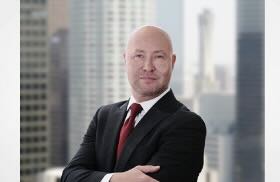
Header Image :John Kucera
With a Vault 100 and Am Law 200 law firm at its center, this might be Biglaw’s biggest artificial-intelligence mishap to date.
As Andy Warhol is famously credited with saying, “In the future, everyone will be world-famous for 15 minutes.”
Here’s what I’m wondering: in the future, will everyone be world-famous for 15 minutes… for an AI screw-up?
Why do I say this? AI mistakes are no longer the exclusive province of the wantonly stupid. They can even be committed by leading litigators at famous firms.
Meet John Kucera, a partner in the Los Angeles office of Boies Schiller Flexner, whose firm bio describes him as “a former prosecutor with extensive experience in high profile litigation.” According to his LinkedIn profile, Kucera has been practicing for more than 20 years, including more than 12 years spent as a federal prosecutor in the Central District of California (aka Los Angeles).
As for Boies Schiller Flexner, the firm needs no introduction. Founded in 1997 by the celebrated trial lawyer David Boies after he left Cravath, Swaine & Moore, today BSF is one of the most prestigious and profitable law firms in the nation. It’s currently #55 in the Vault 100, the nation’s 100 most prestigious law firms, and #118 in the Am Law 200, the country’s 200 largest law firms based on revenue. (And BSF has reached even greater heights in the past: it used to be an Am Law 100 firm, and it was #12 in the Vault 100 a decade ago.)
Boies Schiller Flexner is well-known for representing plaintiffs as well as defendants, and some of its plaintiff-side clients are victims—most famously, victims of the late Jeffrey Epstein. So it shouldn’t be surprising that John Kucera and BSF represent victims of the actor Danny Masterson, who was convicted in May 2023 of raping two women. In their civil case—filed in California state court against Masterson, the Church of Scientology (to which Masterson belonged), and Scientology leader David Miscavige—the five plaintiffs claim that after coming forward about Masterson, they “were subjected to a relentless campaign of harassment, surveillance, threats, and defamation, both online and offline.”
The Church of Scientology filed a motion to strike under California’s anti-SLAPP statute. After Judge Upinder Kalra of Los Angeles County Superior Court denied the motion, the Church appealed to the California Court of Appeal for the Second District. Represented by Horvitz & Levy, a highly regarded appellate boutique, and Winston & Strawn, the well-known Biglaw firm, the Church filed its opening brief in April. The plaintiffs, represented by John Kucera and BSF, filed a response brief. Then the Church filed its reply brief, which began as follows:
Before addressing the merits of this appeal in the introduction section below, we wish to draw the court’s attention to the fact that plaintiffs’ brief contains a series of troubling citation errors. The portions of the brief containing errors bear many of the hallmarks of AI-generated case citations. A table detailing the errors we identified is included as Attachment A at the end of this brief….
[M]ultiple sections of plaintiffs’ brief are filled with erroneous citations that mischaracterize holdings and refer to cases on unrelated areas of law. Some cases are mistitled such that it is difficult to determine what cases plaintiffs are intending to cite in the first place. And one case plaintiffs cite is completely made up. At minimum, this court should disregard these sections of plaintiffs’ brief and find the arguments plaintiffs make forfeited.
Yikes—this sounds bad. And it turns out to be true, as Kucera acknowledged in BSF’s motion for leave to file a corrected response brief, which he filed last Friday. Here’s the relevant portion of the declaration submitted by Kucera in support of the motion:
I was and am the sole Firm partner with responsibility for overseeing the preparation and filing of the Filed Response Brief in this action. Under my direction, and with consent of the individual Respondents, the preparation of the Filed Response Brief included the use of artificial intelligence tools. The Firm is committed to the responsible use of artificial intelligence and has adopted policies and implemented trainings intended to protect against the risks of the improper use of artificial intelligence. Independent of the use of artificial intelligence tools, Firm lawyers are always expected to scrupulously proofread and cite check the accuracy of the factual and legal claims in court filings.
Read more