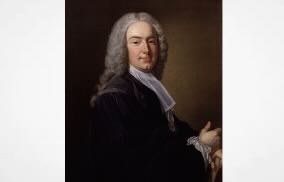
Header: Portrait of Mansfield by Jean-Baptiste van Loo
Source: WIPO Music Magazine
In the hushed concert halls of 18th-century London, few could have imagined that the notes floating through the air would become the subject of one of history’s most consequential legal battles. Yet it was during this period that the concept of the “musical work” as legal property was first brought before the courts.
The relationship between music and copyright law reveals profound shifts in the ways we understand creativity, authorship and the nature of musical expression. From the quill-penned musical scores of past centuries to today’s algorithmically generated compositions, the question of who owns a musical creation – and, indeed, what constitutes such a creation – continues to reverberate through our legal frameworks and philosophical understanding.
The birth of the musical work
The youngest son of the legendary Johann Sebastian Bach is perhaps an unlikely protagonist in the story of music copyright law.
In 1763, Johann Christian Bach received a royal privilege giving him exclusive publishing rights to his compositions for 14 years. Initially acting as his own publisher, Bach released his trios “Op. 2” and symphonies “Op. 3” under his own label before turning his attention to other ventures, most notably the concert series he directed with his friend Carl Friedrich Abel at London’s Vauxhall Gardens.
Success, however, often breeds imitation. In 1773, Bach discovered that publishers Longman and Lukey had obtained copies of his musical works and were selling them without permission, reaping substantial profits from his creative labor.
Unlike many composers of his time who might have accepted this common practice, Bach possessed both the financial means and determination to challenge it through legal channels.
Through his attorney, Charles Robinson, Bach filed a formal complaint, stating that he “composed and wrote a certain musical composition for the harpsichord called a ‘sonata’” and that “being desirous of publishing the said musical work or composition” he had applied for and been granted a “royal privilege.”
The document described how the publishers had “by undue means obtained copies” and “without your orators license and consent printed, published and sold for a very large profit, divers copies” of his work.
What followed was a four-year legal odyssey that would reshape copyright law. Bach and his collaborator, Abel, initially filed two bills of complaint through a lawyer, but were unsuccessful.
With these words, the “musical work” was legally born
Realizing that his royal privilege offered insufficient protection because its status would erode over time, Bach shifted his strategy and sought clarification that musical compositions were within the scope of the Statute of Anne.
The case finally reached the King’s Bench in 1777, where it was heard by Lord Mansfield, a judge known for his progressive interpretation of copyright law. His ruling was nothing short of revolutionary:
“The words of the Act of Parliament are very large: ‘books and other writings.’ It is not confined to language or letters. Music is a science: it may be written; and the mode of conveying the ideas is by signs and marks. […] We are of the opinion that a musical composition is a writing within the Statute of the 8th of Queen Anne.” (Bach v. Longman, 98 Eng. Rep. 1274 (K.B. 1777)) (Eng.).
With these words, the “musical work” was legally born. Lord Mansfield certified that music was protected by the copyright act, dispelling previous doubt on the matter and ensuring that Bach would be remembered not only for his compositions but also for changing how the law views the art of music.
Read full story